
wood floor care
Why Hardwood Wears Faster Around the Kitchen Sink
A worn patch by the sink can involve grit, repeated moisture, residue, or finish loss. Find the cause before adding a rug or another coating.
The sink area has more than one source of wear
Hardwood near a kitchen sink gets repeated footsteps, grit, drips, and cleaning. A dull or dark patch can reflect one of those conditions or several together. Do not assume the answer is simply a stronger cleaner.
First check for moisture and residue. Then assess whether the finish is still intact. A new coat cannot correct a leak or erase damage that has reached the wood.
Look beneath the mat
Remove the mat and inspect its underside and the floor. Look for dampness, trapped grit, backing residue, or a shape that matches the discolored area.
A protective mat only helps when its material suits the floor and the area beneath it stays clean and dry. Our rug-pad guide explains why the backing matters as much as the visible surface.
Bruce’s floor-care guidance emphasizes appropriate protection and prompt cleanup. Do not leave a damp mat in place because its top feels dry.
Separate a spill pattern from a leak
Occasional drips during dishwashing differ from moisture that returns when the area has not been used. Check the cabinet and nearby appliances for signs of a continuing source.
Persistent dampness, changing board shape, or recurring darkening warrants further assessment. Have the source addressed before planning cosmetic restoration.
Our cupping-and-crowning guide explains visible shape changes. A photograph can help describe them, but the floor’s moisture condition still needs investigation.
Change the maintenance routine if it is adding residue
Keep loose grit under control and clean with the finish-approved product. Use a clean pad and avoid repeatedly wetting the same patch to chase a mark that does not change.
Kitchen degreasers are not automatically suitable for wood flooring. If you have used a multipurpose cleaner, polish, or restorer, save the label and include it in the assessment.
A sticky surface calls for different questions than exposed, rough wood. Both may look dull from across the room.
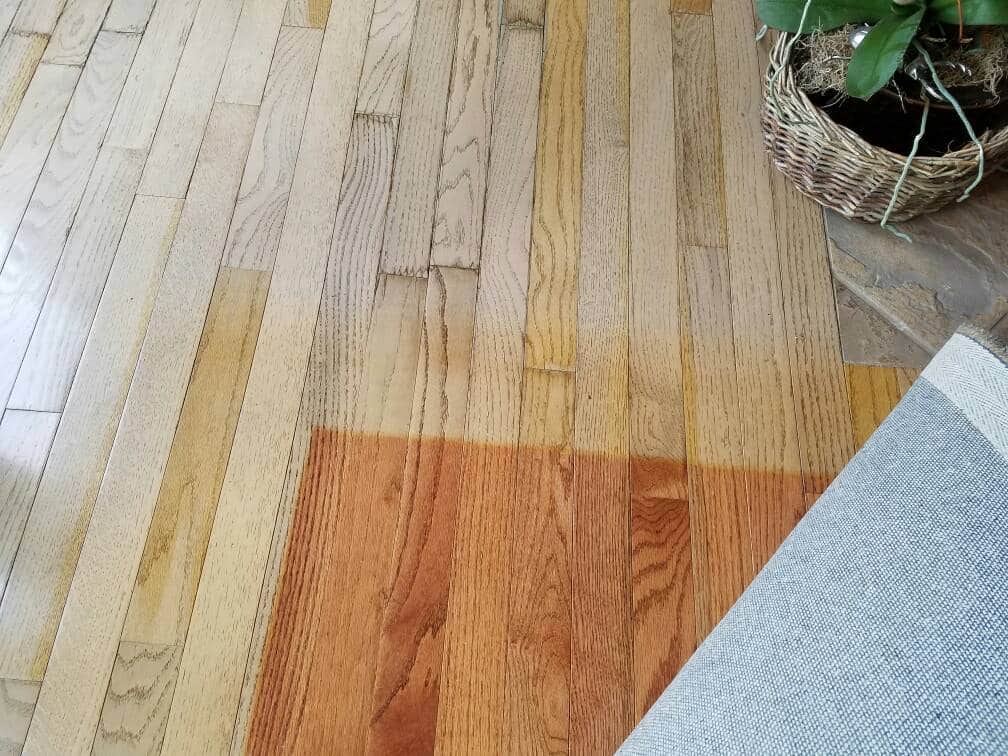
Surface preparation cannot correct a continuing leak. Kitchen wear should be assessed after moisture and maintenance conditions are understood.
Decide how much of the floor needs attention
If compatible cleaning removes the problem, continue with a better maintenance routine. If the finish is worn but sound, a qualified ReCoat may be worth discussing.
A local repair is not always visually invisible. Color, sheen, board layout, and the surrounding wear affect the transition. Our spot-repair guide explains that tradeoff.
If wood is stained or damaged, assess the appropriate restoration after the moisture source is resolved. Do not cover the patch with another layer merely to make it look darker or shinier.
Contact ReCoat Revolution with photos of the sink area, the uncovered floor, and the mat backing. Include any leak history and cleaning products used so the recommendation addresses the cause as well as the appearance.