
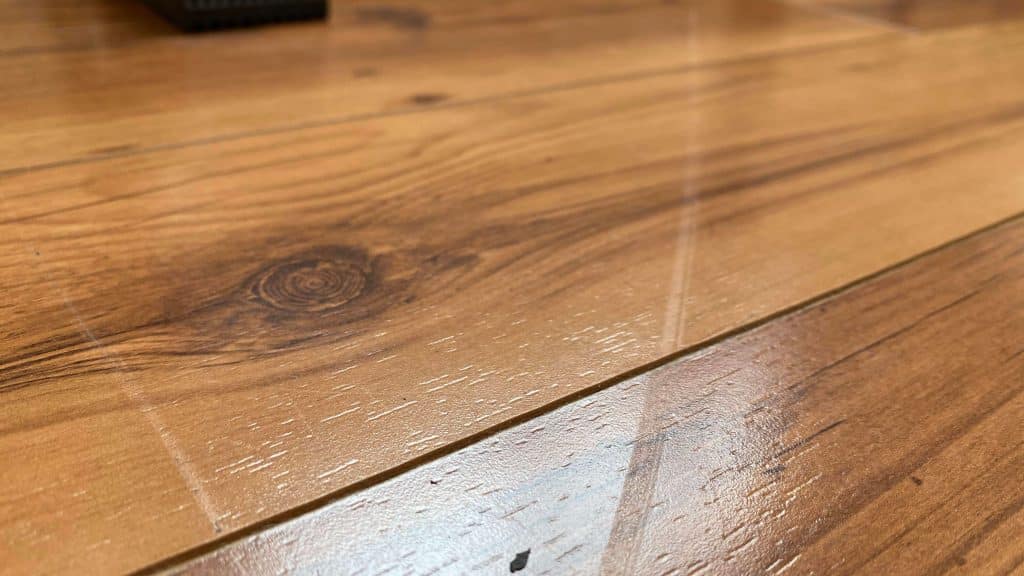
diy vs pro
Can You Spot-Repair Hardwood Floor Finish?
A small hardwood repair can leave a visible color or sheen edge. Learn when touch-up, board repair, room-wide coating, or refinishing makes sense.
A small floor repair can still make a visible patch
Yes, some hardwood-floor damage can be repaired locally. The challenge is not only fixing the defect. It is making the repair meet the surrounding color, sheen, and texture without an obvious edge.
A small scratch does not automatically justify refinishing the whole house. But a small damaged area does not guarantee an invisible small repair either. The floor’s construction and finish determine the options.
Decide whether the mark needs repair at all
Look at the floor in normal use, not only with your face beside a bright work light. A tiny mark that is acceptable from standing height may be worth leaving alone rather than turning it into a larger patch.
That is an honest option. A floor is a working surface, and the most invasive repair is not always the best value.
If the mark exposes wood, catches on feet, or continues to deteriorate, it deserves more attention. Our scratch-depth guide explains the difference between a finish mark and missing material.
Match the method to the damage depth
A compatible touch-up can reduce the contrast of a minor mark. It does not flatten a dent. A filler can change the appearance of missing material but may remain visible. Board replacement addresses a different level of damage.
Bruce’s scratch-repair guide describes several repair categories. Its hardwood FAQ includes board replacement among the options.
Read product directions carefully. Do not use a furniture repair material across a floor merely because its color is close. Future finish compatibility matters as much as the first day’s appearance.
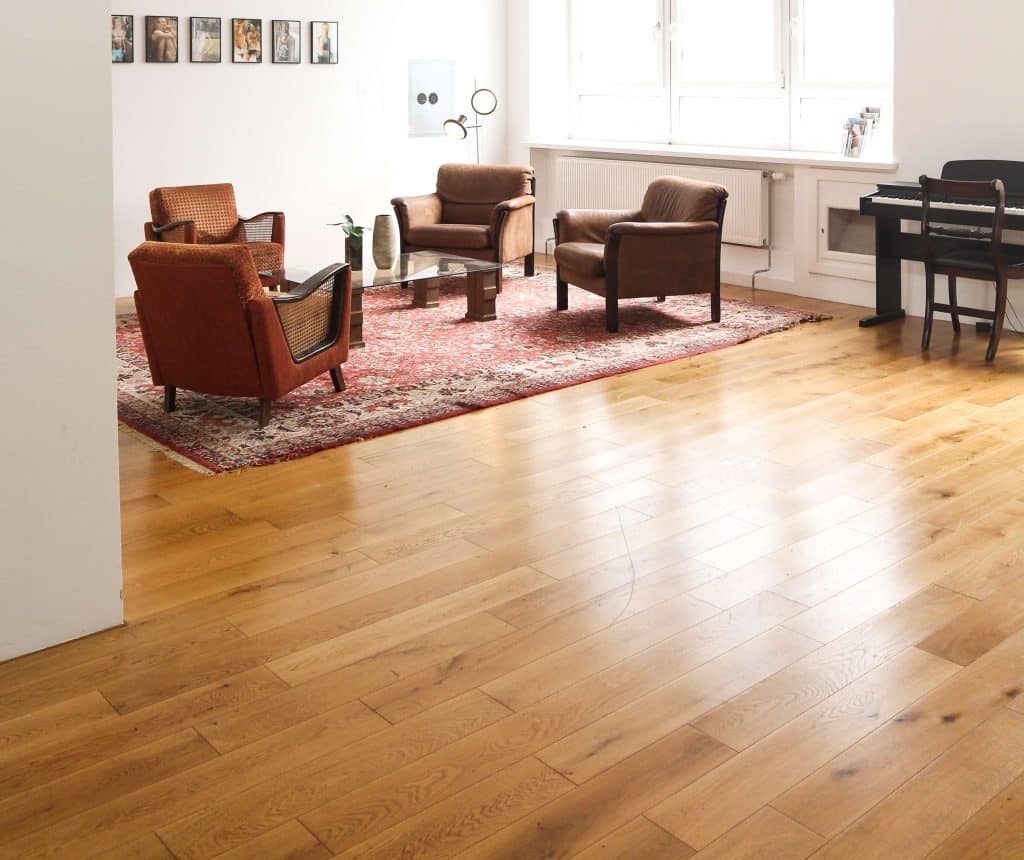
A continuous room surface illustrates why a small repair can affect the choice of coating boundary.
Why the repaired spot can look different
A color match is only one part of a blend. New finish can reflect light differently from worn finish. The texture can differ. A thicker application can leave a boundary. The surrounding wood may have aged under light for years.
That is why a patch can look acceptable from above and stand out from the doorway. Inspect proposed samples across the direction of the strongest light, not only straight down.
Our matte-versus-satin guide explains reflection. The faded-floor article explains why old and newly exposed areas may differ in color.
A natural stopping point can make the scope more useful
Sometimes a repair can follow board boundaries or a doorway. In other cases, coating a broader continuous area produces a more consistent sheen than brushing finish over one isolated spot.
That does not mean the entire floor needs sanding. It means the contractor should explain the proposed boundary and what it accomplishes. Our one-room refinishing guide covers similar transition questions.
Ask to see the expected edge in your room. “It will blend” is too vague if the repaired area sits in the strongest reflection path.
Compatibility comes before the brush
A local patch still needs a suitable surface. Old polish, wax, contamination, and unknown finish can affect whether the new material adheres. Do not assume small area means preparation no longer matters.
The NWFA refinishing guidance distinguishes the work needed for more substantial damage. If the existing coating is peeling or the boards are unstable, a spot finish repair does not solve the underlying issue.
Engineered flooring also needs care. Removing material to blend a patch can be limited by its veneer and prior work. Tell the contractor about the construction before anyone starts sanding.
Choose the smallest scope that gives an acceptable result
A ReCoat may improve the consistency of suitable existing finish after repairs. Sanding and refinishing can address deeper surface work when enough material remains. Neither guarantees an invisible repair in every floor.
Agree on what “acceptable” means before the job: less noticeable, protected from further wear, or a close visual match. Those are different standards and may carry different costs.
When you contact ReCoat Revolution, send a close photo and a wider view showing where the mark sits. Tell us whether you want a modest touch-up or the most consistent finish practical. We can explain the tradeoffs without turning every scratch into a whole-house project.