
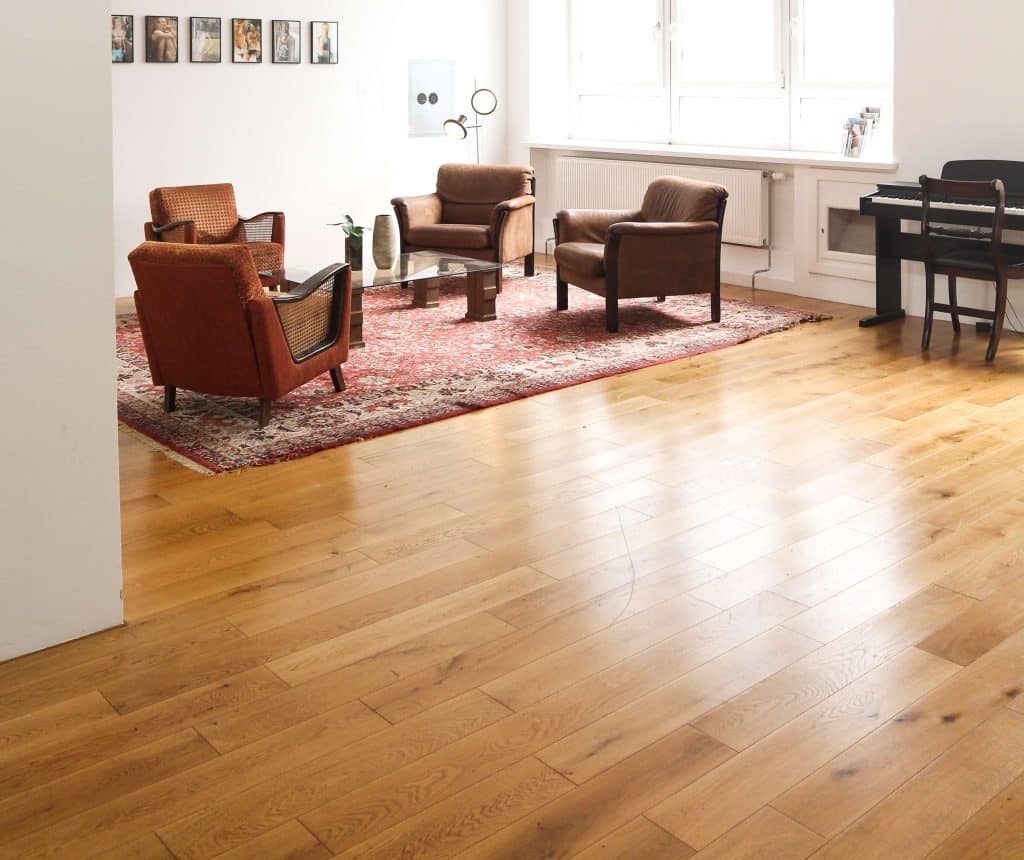
buyer guides
Matte vs. Satin Hardwood Floors: Which Works?
Matte and satin change how hardwood reflects light. Compare daily appearance, cleaning, scratches, and sample choices without confusing sheen with strength.
Matte versus satin is a choice about reflection
Choose matte if you want the floor to reflect less light. Choose satin if you want a gentle glow without a high-gloss look. Neither label alone tells you how durable the floor will be.
Our practical recommendation is to compare samples of the exact finish in your house. A showroom label and a bright phone photo are poor substitutes for seeing the floor beside your own windows.
| Question | Matte | Satin |
|---|---|---|
| How does it look? | Quieter, less reflective | Soft reflected light |
| Will marks show? | Some light scratches are less conspicuous | Reflections may reveal fine marks |
| Does it change stain color? | No, not by itself | No, not by itself |
| Is it always stronger? | Sheen does not establish strength | Sheen does not establish strength |
| What decides the winner? | Your lighting and preferred appearance | Your lighting and preferred appearance |
Use the same finish family for a fair comparison
Manufacturers do not all use sheen names identically. “Satin” from one line may look different from another. Comparing a matte sample in one coating with satin in another mixes several variables.
Bona Traffic HD’s technical sheet lists multiple sheen options in one finish family. That is an example of how to make a more useful comparison, not a claim that every ReCoat crew uses that product.
Ask the contractor which system they propose and which sheens it offers. Then assess those options on the actual floor color or a representative sample.
A shiny floor is not necessarily a tougher floor
The surface’s resistance depends on the finish system, preparation, application, curing conditions, and maintenance. Reflection alone cannot answer whether a coating will handle your household.
A deep groove from dragging a refrigerator can damage either sheen. Grit under a chair can wear either surface. Matte may make certain marks less obvious, but it does not make the boards immune to damage.
Bruce’s flooring-selection guide notes the visual benefit of lower gloss for everyday wear. Keep “less visible” separate from “cannot happen.” Our scratch guide explains the difference between finish marks and damage in the wood.
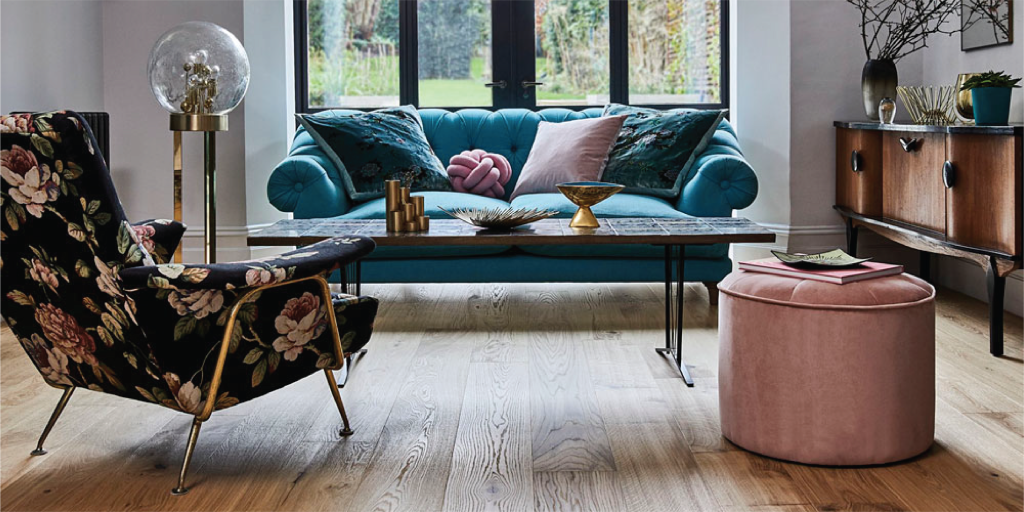
Daylight and furnishings affect how shiny a floor appears. Compare finish samples in your own room.
Look at the sample from where you actually live
View it while standing at the entry, sitting on the sofa, and looking across the room toward the windows. Check it in daylight and with the lights you use in the evening.
A floor can look pleasantly subtle head-on and reveal every reflection from a low angle. Dark stain also makes certain dust and contrast patterns easier to see. Do not ask the sample to perform under lighting you never use while ignoring the room’s strongest light path.
The NWFA finish overview provides the broader context. If color is also part of the decision, read water-based versus oil-based finish before attributing every visual difference to sheen.
Do not polish matte floors into a different look
If the floor is intentionally matte, it is not failing because it lacks a wet shine. Use the approved cleaner and let the finish look like itself.
A consumer polish changes the surface you are maintaining. Our Bona cleaner-versus-polish guide explains that distinction. It is better to discuss a deliberate finish change than to build a new shine layer one cleaning session at a time.
Choose the service after choosing the result
If you like the existing color and the floor qualifies, ReCoating may provide a new sheen. If you want a different stain color or need deeper repairs, that is another scope of work. See our ReCoat-versus-refinish guide for the broad distinction.
Keep your expectations specific: lower reflection, an even sheen, or a different color. “Make it look new” hides several separate decisions.
When you contact ReCoat Revolution, tell us what you like about the current floor and what bothers you in daylight. We can help compare the finish options that fit the floor you actually have.