

product comparisons
Can You Use Pledge on Hardwood Floors?
Pledge furniture polish and floor products are different. Learn why the exact label matters and what to do if polish lands on your hardwood floor.
Pledge furniture polish does not belong on your floor
Do not spray Pledge Enhancing Polish on hardwood floors. The manufacturer’s own directions exclude floor use. “Safe on sealed wood” does not cancel that restriction: a dining table and the floor beneath it are different surfaces in use.
That does not mean every product carrying the Pledge name is furniture polish. Read the entire label before deciding what you have. A dedicated floor product still needs to be compatible with your flooring and finish.
The Pledge Orange Enhancing Polish page makes the floor exclusion explicit. We would start there rather than with a familiar yellow can or a family cleaning habit.
The shine is not the same job as cleaning
A furniture polish is meant to leave a particular appearance on a surface. Your floor needs a cleaning method that removes ordinary soil while respecting its finish and how people walk across it.
The professional Pledge product sheet also warns against floor use and overspray because of slipperiness. This is a practical reason to protect the floor while polishing nearby furniture, not merely a future refinishing concern.
Spray the furniture product onto its intended cleaning cloth when the label permits that method. Keep the application controlled. Do not let the floor become the place where excess mist settles.
If you already used it, identify the problem first
Stop applying the product. Save the bottle and photograph its front and back. Note whether the floor feels slick, looks smeared, or has changed only in certain areas.
Keep traffic away from a slippery spot while you determine a compatible cleanup method. Do not add a rug that can slide across it, or assume repeated dry buffing will make the area suitable for normal use.
Ask the floor or finish manufacturer about removing that specific product. A homemade solvent mixture may disturb the finish as well as the residue. Our sticky-floor guide explains why identifying the added material comes before choosing stronger chemicals.
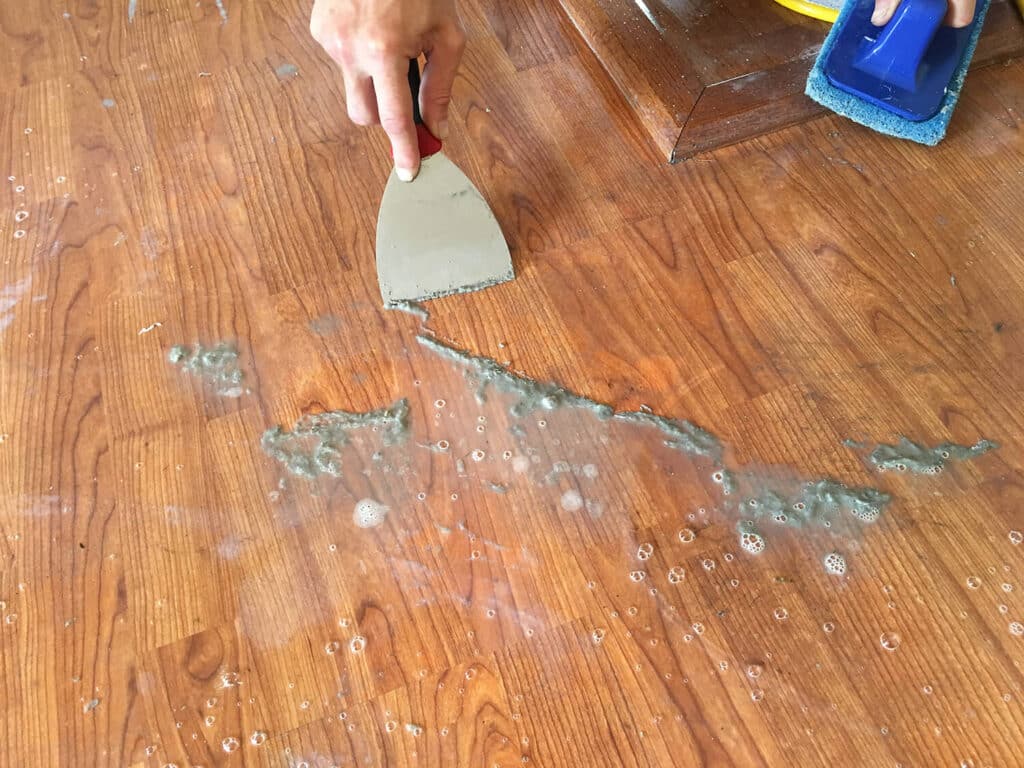
Professional surface-material removal is a separate service from daily cleaning. Identify any added product before choosing that scope.
A familiar brand name is not a diagnosis
Using furniture polish does not, by itself, prove that the floor needs sanding or replacement. The next step depends on what remains after compatible cleaning and whether the original finish is intact.
If you used a dedicated floor polish instead, that creates a different conversation. It may add a surface layer that a contractor must identify before applying professional finish. Our cleaning, polishing, and ReCoating comparison separates those jobs.
Be specific when requesting help. “We used Pledge” leaves the main question unanswered. A label photo, application history, and description of the change are much more useful.
Keep the next maintenance step simple
Choose the cleaner approved for your floor’s finish. Remove grit, use a clean pad, and avoid adding a shine product merely because the floor looks dull. Dullness may be residue, normal matte sheen, or worn protection.
If the finish is sound but needs renewal, discuss a qualified ReCoat after the surface is assessed. If a layer needs removal first, that should appear in the scope. Neither service should be selected from the brand name alone.
Contact ReCoat Revolution with the product label and floor photos. We can help separate a cleanup problem from a finish-restoration problem before you spend money on the wrong job.