
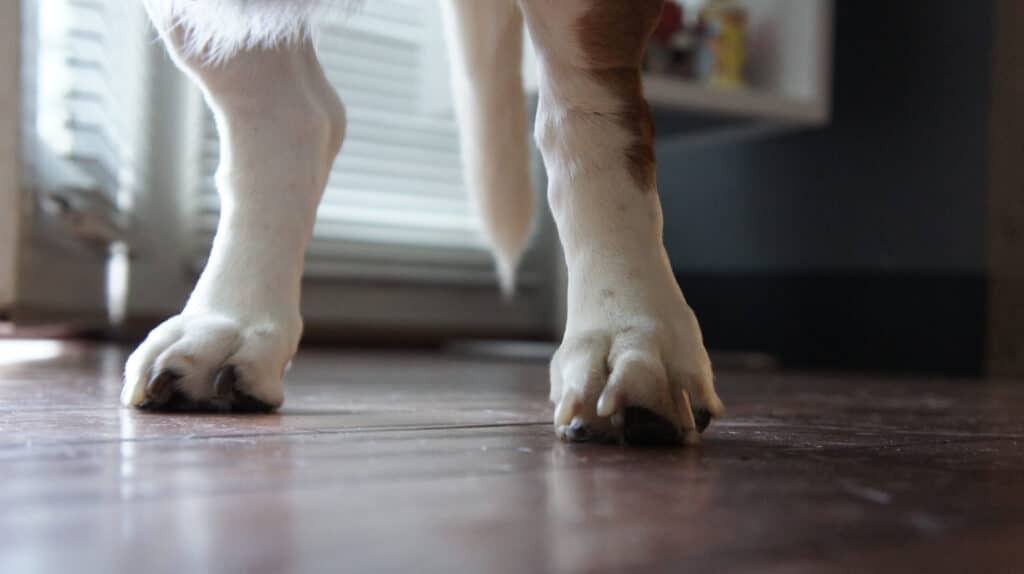
pet damage
How to Prevent Dog Scratches on Hardwood Floors
Reduce dog scratches with grit control, nail care, and better traction. Learn why finish helps but cannot make hardwood scratch-proof.
Prevent dog scratches by managing the daily wear
The best defense against dog scratches is a combination of grit control, appropriate nail care, and traction where your dog runs or turns. A good finish helps protect the floor, but no clear coat makes wood scratch-proof.
You do not need to stop your dog from living in the house. Focus on the few places where the same movement happens every day: the back door, the turn into the kitchen, and the race toward the front window.
Find the pattern before buying a repair kit
Look at the marks in daylight. Fine lines in reflected light may be limited to the finish. A deeper groove or compressed board surface needs a different assessment. Grit under paws can contribute too, so nails may not be the only cause.
Our scratch and drag-mark guide explains the repair distinction. Bruce’s scratch-repair article is another reference for separating small touch-ups from more substantial damage.
If the same path keeps getting marked, repairing it without changing the daily pattern invites the same result.
Make the route easier on the floor
Keep the main entry clean so sand and grit do not travel through the house. Use an appropriate mat and remove accumulated debris beneath it. Wipe damp paws without leaving a wet towel or mat sitting on the wood.
Provide secure, floor-compatible traction where the dog tends to accelerate or turn. A loose rug that slides underfoot can make the situation worse. Ask the flooring manufacturer about suitable backing rather than assuming every rubber pad is safe.
NWFA prevention guidance includes protective habits for busy households. The idea is to reduce repeated concentrated wear, not add a finish layer every time a new line appears.
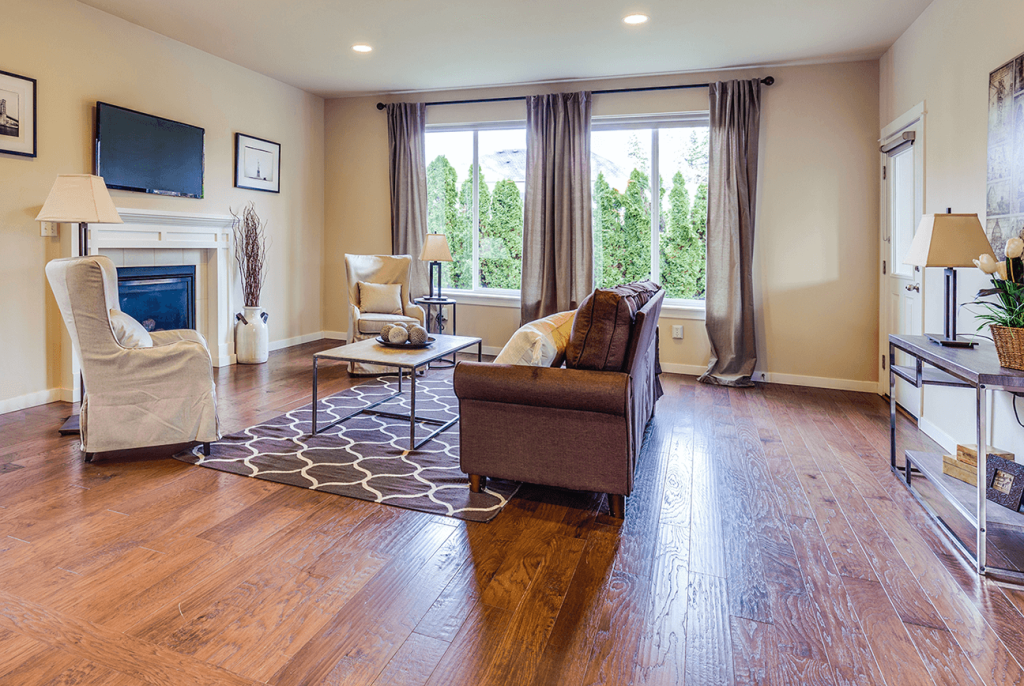
A living area with several traffic paths. Protect the routes used most often, rather than treating every room the same.
Nail care helps, but it is not a floor warranty
Use a groomer or your veterinarian’s guidance for appropriate nail maintenance. Do not treat an aggressive nail trim as a flooring solution. Even well-maintained nails can mark a floor during a fast turn, particularly when the surface is slippery or the wood is soft.
A dog’s size, gait, and movement pattern affect where force concentrates. So does the board itself. Finish protects the surface; it does not transform a softer species into a harder one.
For a calmer appearance, matte or satin finish may make certain marks less conspicuous. That is an appearance decision, not proof of additional resistance.
Keep food and water areas in the prevention plan
Scratches are only part of pet-related floor wear. Check beneath bowls and mats for trapped moisture. A waterproof-looking mat can still hold a spill against the floor if water gets underneath.
Remove spills promptly using a finish-compatible method. If accidents have left dark marks, use our black pet-stain guide. A scratch repair will not address discoloration deep in the wood.
Bruce’s care guide connects protection with routine maintenance. Small repeated habits usually matter more than a one-time purchase labeled pet-friendly.
When the finish needs attention
If traffic paths stay dull after proper cleaning, have the remaining finish checked. A Clean ReCoat may renew protection on a compatible floor before wear becomes deeper.
It will not flatten dents or make every scratch disappear. Agree on which marks are likely to remain before booking the work. Our pet-damage overview sets out those broader limits.
Plan pet access after the service with the crew. A floor that permits gentle human walking may not yet be ready for claws, skidding, bowls, or accidents. The exact coating instructions decide that schedule.
If you want help deciding between better protection and repair, contact ReCoat Revolution with photos of the main dog routes. Include a close view of the deepest marks and a wider view of the room. We can help you choose a practical improvement without promising an impossible scratch-proof floor.