
buyer guides
Why Are Hardwood Floors Turning Orange?
Orange hardwood may reflect aging finish, wood color, stain, or lighting. Learn when a clear ReCoat helps and when the color change requires deeper work.
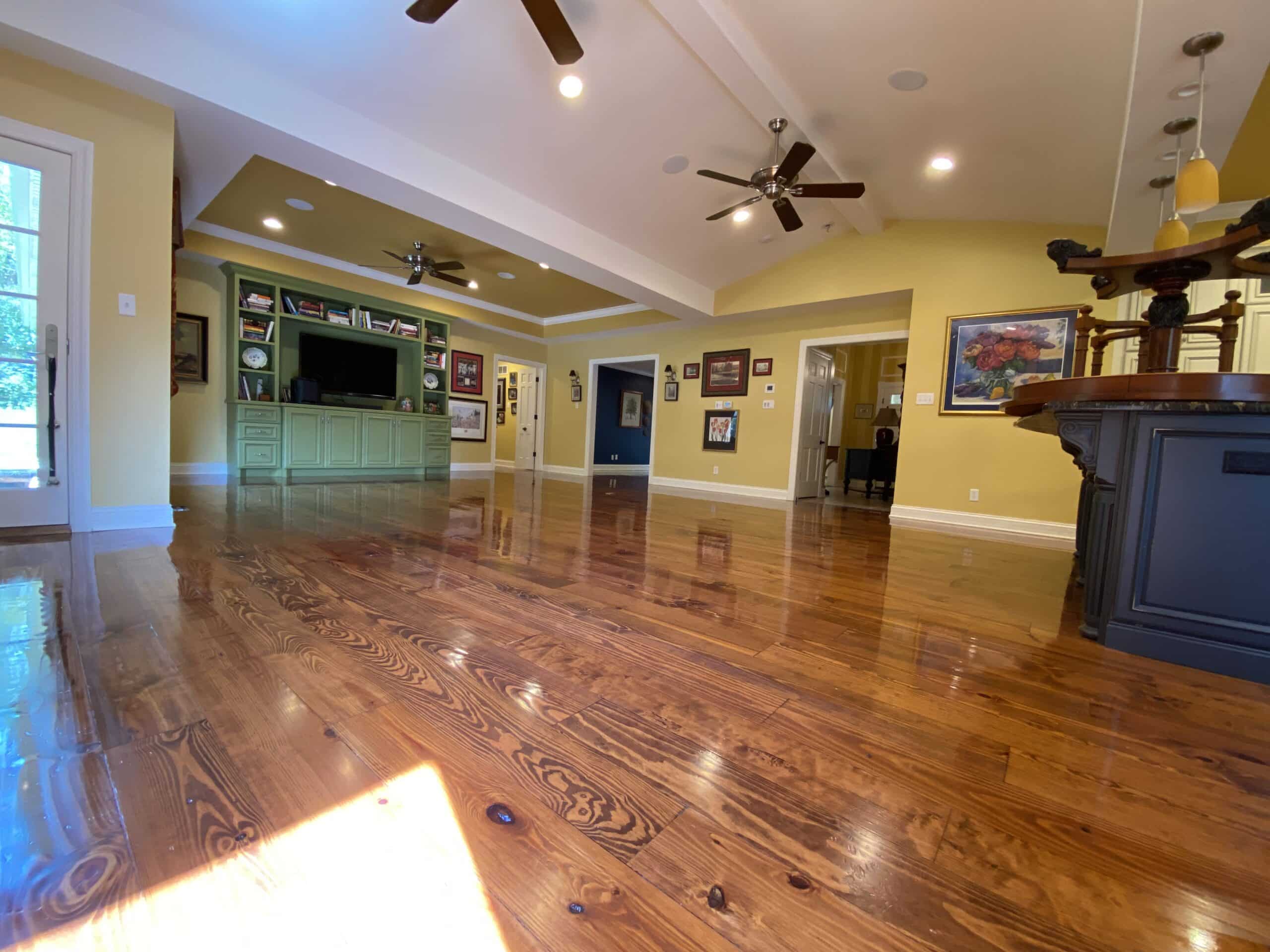
Orange hardwood is a color question, not a shine question
A wood floor can look warmer or more orange because of its wood species, stain, aging finish, light exposure, or the lighting in the room. The right remedy depends on where that color comes from.
A fresh clear coat does not erase the stain and aged material beneath it. If someone promises to turn an orange floor pale with a routine maintenance coat, ask exactly what they will remove or change.
Compare the floor under consistent light
Look at the same boards in daylight and with your evening lighting. Warm bulbs, wall colors, reflected furnishings, and camera settings can change the apparent tone.
A phone image with automatic color correction is not a reliable stain sample. Use photos to document the area, then make finish decisions with physical samples viewed in the room.
Compare exposed areas with locations that were covered by rugs or furniture. Our faded-floor article explains why different exposure histories can produce different colors on the same floor.
Wood, stain, and finish each contribute
Wood has its own natural color. Stain adds color to that surface. Finish adds protection and can also affect appearance. Changing one does not necessarily cancel the others.
The NWFA finish overview explains different systems. Our water-based-versus-oil-based article discusses their appearance differences, including the importance of what is already on the floor.
If a contractor proposes a clearer finish, ask whether the old amber-colored material remains underneath. A different topcoat may affect future appearance without removing the existing source of warmth.
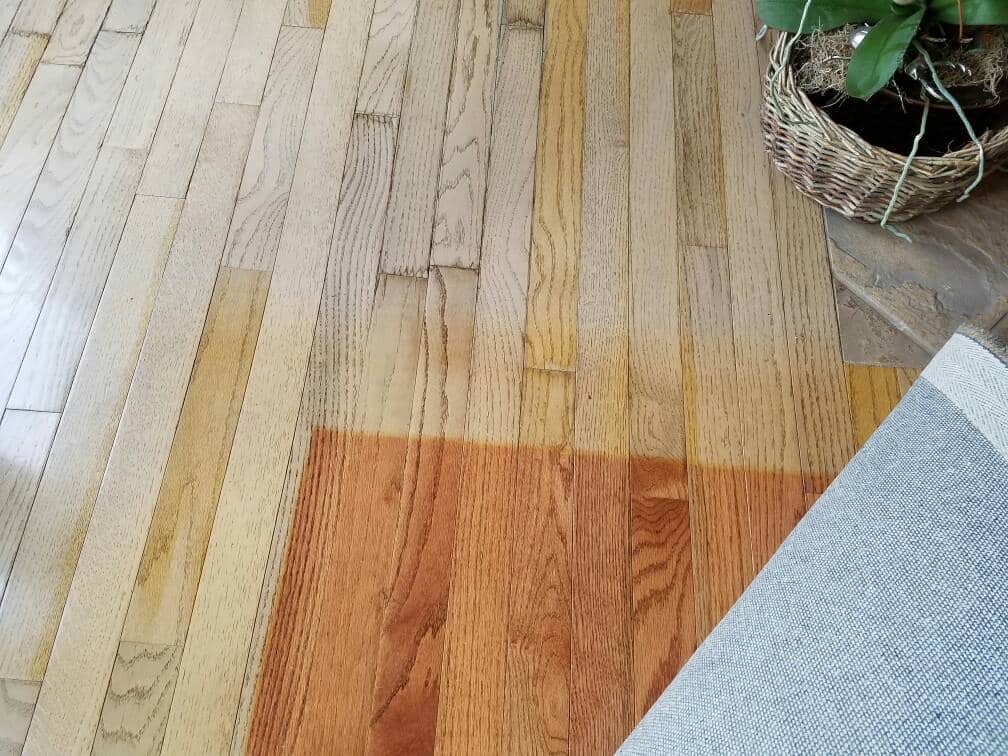
A visible color transition. A clear topcoat will not automatically remove differences in wood, stain, or aged finish.
Do not assume every warm patch is natural aging
Residue, an added polish, or an uneven older repair can also change appearance. List the products used and identify any areas that were coated or repaired separately.
Bona’s cloudy-floor guidance describes how surface layers can alter the look of a floor. That possibility belongs in the assessment before deciding the wood itself needs to be sanded.
A compatible cleaning evaluation may clarify the surface. It should not turn into a series of stronger chemicals intended to bleach away a color you have not identified.
Decide whether you want less glare or a different color
These are separate requests. A lower sheen can make reflections quieter. It cannot remove the warm tone of the wood or the stain beneath it.
Our matte-versus-satin guide helps with reflection. The sheen-change article explains when a maintenance coat may suit that goal.
If you like the underlying color but dislike a glossy orange-looking reflection, compare a sample. If you want the boards themselves to look much lighter, discuss a deeper color-change scope.
Color correction needs a representative sample
A stain swatch on a different species is not enough. Ask for the proposed preparation and finish on a representative area or suitable matching material. Examine it after the relevant drying or curing stage, not only while it is wet.
Bruce’s hardwood FAQ notes that wood changes under light. A new sample also cannot promise the floor will never change again.
If removing old stain or finish is part of the plan, confirm that the floor has enough usable material. Engineered construction and earlier sanding can limit options.
Keep the service tied to the goal
A Clean ReCoat renews suitable existing finish. Stain and coat work is a different conversation about color and preparation. Neither should be described as a universal cure for orange floors.
Do not add a tinted household polish as a quick experiment. It can complicate the professional preparation without giving you a reliable preview.
When you contact ReCoat Revolution, send daylight photos and a reference for the color you want. Tell us whether the floor changed recently or has always looked warm. We can help separate lighting, sheen, and actual color correction before choosing the work.