
recoating education
Can You Change Floor Sheen Without Sanding?
A compatible ReCoat can change hardwood sheen without sanding to bare wood. Learn the preparation, sample, and damage limits before switching the look.
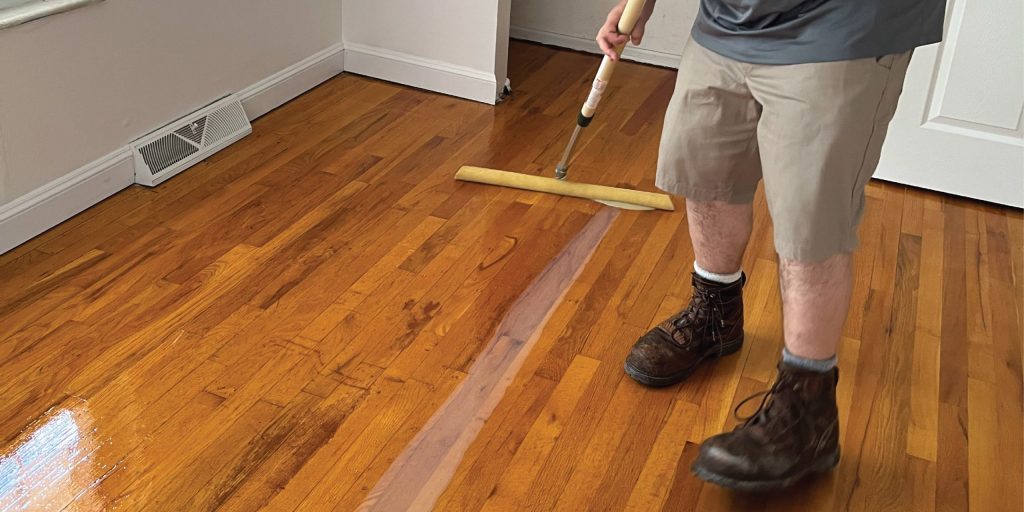
Yes, a qualified ReCoat can change hardwood sheen
You may be able to change a glossy hardwood floor to a quieter sheen without sanding it to bare wood. The existing finish must be sound and compatible with the proposed coating after proper preparation.
The word qualified does the work in that answer. We cannot choose a finish from a photo, pour it over an unknown surface, and promise it will stick.
This is also a sheen change, not a stain-color change. If the real goal is turning a dark floor pale or removing orange color beneath the coating, define that before asking for a maintenance quote.
Start with the result you want
Describe the problem in the room: glare from large windows, an uneven shine in traffic lanes, or a finish that feels too glossy for the rest of the house. Those are useful descriptions.
Bring one or two reference pictures, but treat them as a direction. Lighting, wood species, stain, and photo editing affect what you see. A cured sample on a representative area is the better decision tool.
Our matte-versus-satin comparison helps with appearance choices. The NWFA finish overview explains the broader finish categories.
What the floor has to pass first
A sheen change follows the same basic qualification questions as other maintenance coating work:
- Is the old finish attached? New finish cannot make a failing lower layer stable.
- What has been used on it? Polish, wax, oil soap, and other products can affect preparation.
- Is the wood still protected? Bare traffic lanes may need a different restoration plan.
- Does the proposed system bond? The contractor needs an appropriate compatibility and adhesion assessment.
- Are the boards stable? Active moisture problems take priority over appearance.
Basic Coatings’ professional care guidance describes preparation as part of the coating system. That is why “just put matte over it” is not a complete specification.
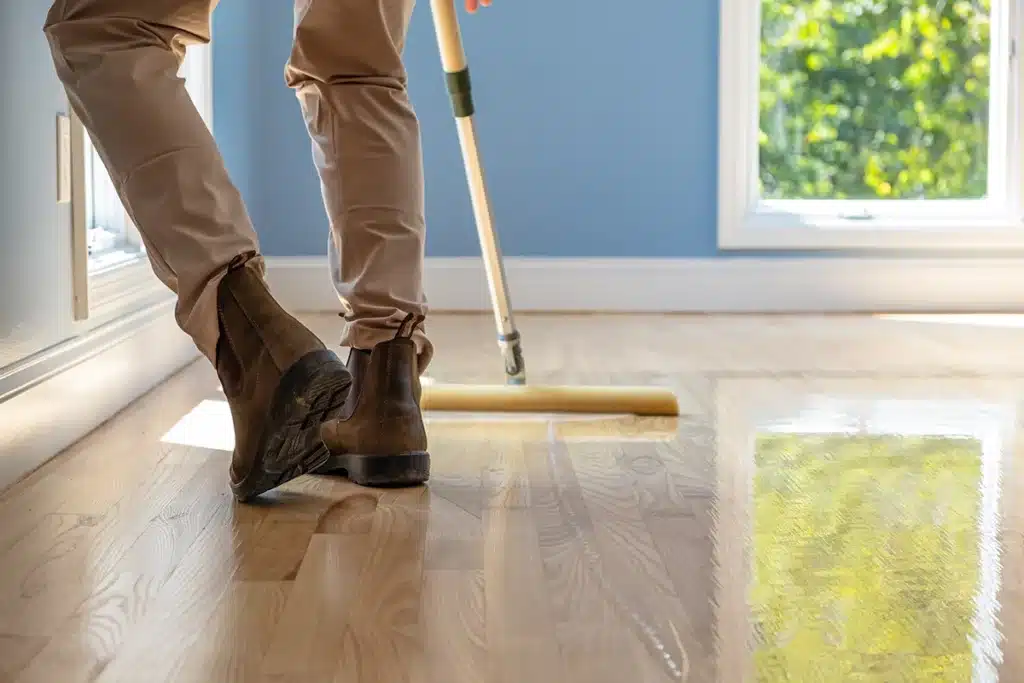
A new finish layer can change sheen when the surface below it is sound and compatible.
No bare-wood sanding does not mean no preparation
Some homeowners hear “without sanding” and picture a coat applied after a quick mop. Others assume every ReCoat removes a layer of wood. Neither picture describes the full range of maintenance processes.
The surface needs cleaning and system-appropriate preparation. That may include abrasion or a chemical preparation method. The purpose is to prepare the existing finish rather than remove the floor’s wood surface.
Our no-sanding restoration guide explains that distinction. Ask your contractor to name the method and why it fits your floor.
Choose the stopping point before choosing the day
Changing sheen in the middle of a continuous room can create a visible boundary. Even if the wood color stays the same, reflected light can show where the work stops.
Discuss doorways, transitions, hallways, stairs, and open-plan connections before approving the scope. The one-room refinishing guide covers similar matching issues.
Check how the sample looks from the adjacent untreated area. An attractive result in isolation may still be a poor transition in the house.
What will still be visible afterward?
A new sheen will not flatten dents, fill deep grooves, remove stains inside wood, or erase every line left by earlier repairs. Some marks may become less noticeable in lower reflection. That is not the same as repair.
NWFA refinishing guidance addresses deeper restoration needs. If your goal requires those changes, sanding and refinishing may be the appropriate discussion instead of a Clean ReCoat.
Plan return to use with the exact finish instructions. A completed coating application is not permission to put rugs and rolling furniture back immediately.
If the floor color works but the shine does not, contact ReCoat Revolution with room photos and your preferred look. Include any polish or wax history so we can assess the preparation honestly.