
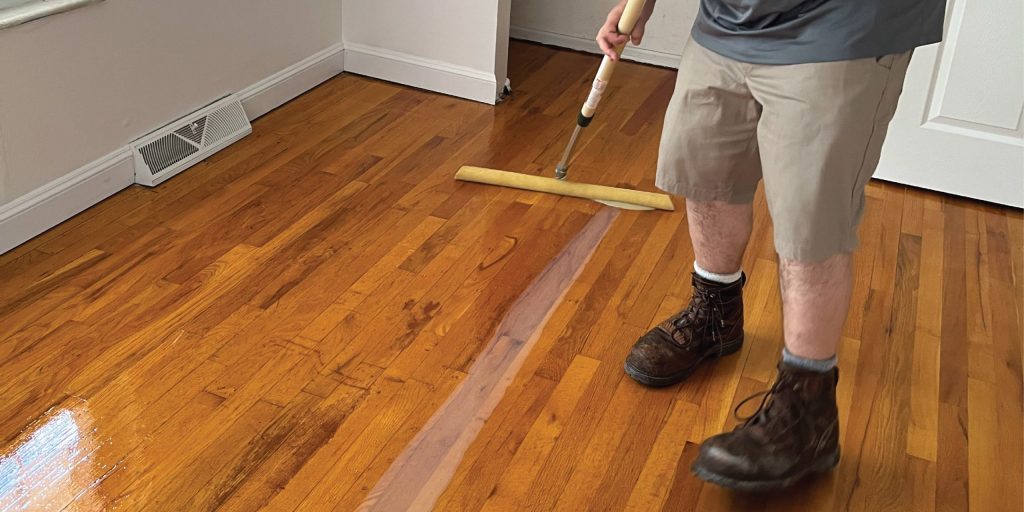
recoating education
Why Test Floor Adhesion Before ReCoating?
An adhesion test checks whether a proposed coating bonds to a prepared floor. Learn what it can show, its limits, and what to ask before ReCoating.
A new coating has to stick before it can protect
An adhesion test checks whether a proposed finish bonds to a prepared area of the existing floor. It helps answer a practical question: will this maintenance coat have a suitable surface underneath it?
That is different from choosing a sheen sample. A sample can look good in the afternoon light without proving the preparation will support the coating. Appearance and bonding both matter.
If you are considering a ReCoat, ask what the contractor will check before treating the whole floor. “It looks clean” is useful information, but it is not a complete compatibility assessment.
What the test is trying to establish
A floor can have an original finish, later maintenance coats, an added polish, and areas with different wear. The proposed coating must work with what remains after preparation.
Bona’s Traffic HD ReCoating instructions call for checking compatibility and adhesion on a small area before proceeding with the entire floor. They also require a sound floor and satisfactory appearance. Those are instructions for a particular system, not a claim that ReCoat Revolution uses it on every project.
The general lesson is simple: assess the actual combination of floor, preparation, and new finish. A product’s reputation cannot answer that question by itself.
A wax check and a bonding check are different
Contamination testing asks what may be on the surface. An adhesion check asks whether the proposed coating system can bond after the relevant preparation. Neither question should disappear just because the other was considered.
The Basic Coatings maintenance checklist asks for maintenance-product information and tests for acrylic or paste wax. Keep the bottles or product names available, including anything used to add shine.
If the history includes polish, our Bona cleaner-versus-polish article explains why the exact label matters. If someone describes the surface as waxed, read why polyurethane should not go straight over wax.
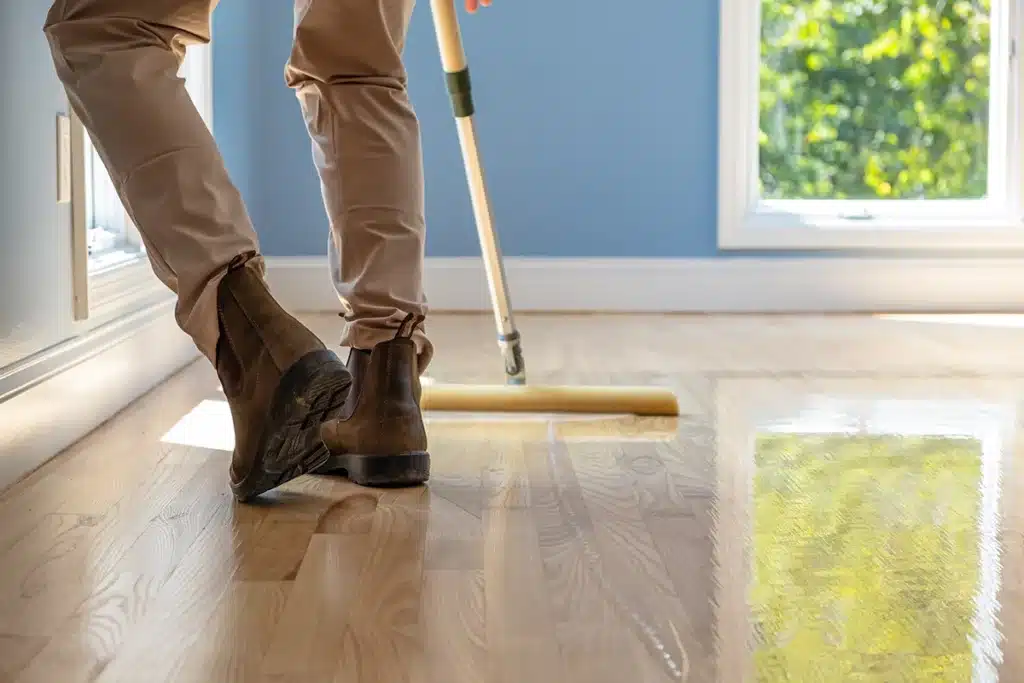
Applying finish follows surface preparation. A coating that looks even still needs a suitable bond to the surface below it.
What to ask before a test area is made
Start with four questions:
- Where will you test? Discuss a discreet but useful area, and whether different rooms or wear patterns need separate attention.
- What preparation does the test represent? The result should inform the method proposed for the actual job.
- When will you evaluate it? Use the finish system’s requirements, not an improvised promise that every coating can be judged immediately.
- What happens to the test spot? Ask whether the check can leave a visible mark and how that area fits into the final scope.
You do not need to become a finish chemist. You do need to understand what the contractor expects to learn and what decision follows the result.
A pass has limits
A satisfactory test does not erase a pet stain, stabilize a loose board, or prove that every square foot has the same history. A kitchen may have received products that were never used in the bedroom.
Nor can a new topcoat repair a weak layer that remains below it. If finish is already lifting, see our peeling-floor guide before treating that problem as ordinary surface wear.
Textured and factory-finished floors deserve particular care in preparation. The Bona Recoat System precautions show how preparation itself can expose vulnerable high points on distressed flooring. A suitable bond is only part of an acceptable result; the floor must also tolerate the process.
A failed check should change the plan
Do not treat a failed check as something to cover with an extra coat. Ask which condition prevented the proposed service and what would have to change.
The answer might involve removing an added layer, revising preparation, considering another compatible system, or assessing a deeper restoration. It should not automatically become a full sanding recommendation without explaining the cause.
A useful estimate states those conditions before the whole room is underway. Our contractor-question guide helps you compare that scope.
To discuss your floor, contact ReCoat Revolution with photos and the products used to maintain it. We can start with the condition and history, then explain which checks belong in the next step.