
recoating education
Can You Put Polyurethane Over a Waxed Floor?
Do not apply polyurethane over an unidentified wax layer. Learn why finish type, contamination removal, and adhesion matter before changing floor systems.
Do not put polyurethane straight over a waxed floor
A new polyurethane coat needs a suitable surface beneath it. An unidentified wax or polish layer is not that surface. Identify the material, choose a compatible removal or restoration process, and verify the preparation before coating.
The important distinction is whether you have a genuine wax-finished floor or a film-finished floor with something added on top. They can look similar from across the room. They do not have the same maintenance path.
The NWFA finish guide separates finish systems. Do not turn “wood floor” into one universal coating recipe.
Ask what the bottle actually says
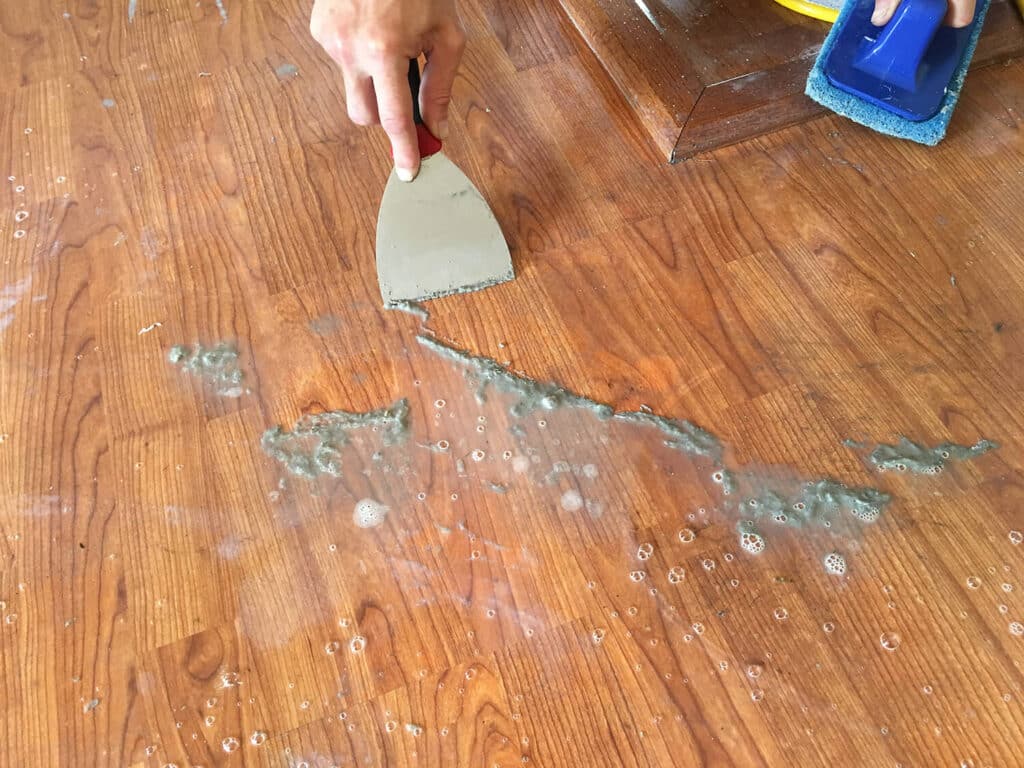
Homeowners often use wax to describe anything that adds shine. That may mean paste wax, an acrylic polish, an oil-soap residue, or a product whose name nobody remembers.
Start with the label, not the nickname. Gather products still in the house and ask anyone who has cleaned the floor what they used. Include the older applications. A product does not disappear from the surface just because the bottle is gone.
Our wax-removal guide covers the broader problem. For a specific product-family confusion, read Bona cleaner versus polish.
Two floors, two different conversations
A floor designed to be maintained with wax: preserving that system may be appropriate. Converting it to a different finish is not necessarily a quick maintenance coat. The condition, material, and desired result need assessment.
A polyurethane floor with added wax or polish: the added layer may need removal before professional coating work. Removing it does not automatically establish that the original finish underneath is sound.
Bruce’s FAQ advises against waxing its urethane-coated floors. Keep that product-specific recommendation distinct from a claim that every traditionally waxed floor is wrong.
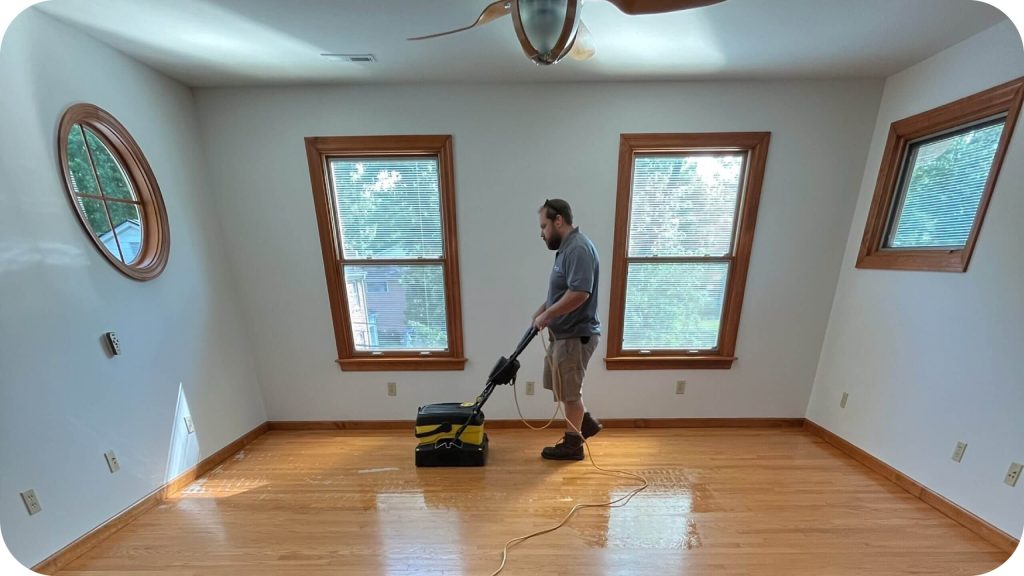
Professional preparation before coating. Identify wax or polish and establish compatibility before applying another finish.
Why looking clean is not enough
A floor may look clear and still carry material that affects bonding. Conversely, a cloudy surface may contain several layers with different causes. The contractor needs more than a quick wipe and a glance.
Basic Coatings’ maintenance checklist separates acrylic and paste-wax testing. That is the useful principle: identify the material before selecting the process.
Ask how preparation will be checked and what happens if the new system does not pass its adhesion requirements. An answer about brand reputation does not replace a preparation plan.
Do not use a household solvent test on a prominent area. Solvents can change the finish you are trying to identify, and a reaction does not always tell an untrained person which layer reacted.
What a removal quote should explain
A useful quote names the scope: which rooms, what material is suspected, how the surface will be evaluated, and whether coating afterward is conditional on what removal reveals.
It should also explain the limits. If old finish comes away with the contaminant, or if bare wood is exposed underneath, the job may need a revised restoration plan. That should be a known possibility rather than a surprise after the first room is stripped.
Our ReCoat qualification guide and buff-and-coat explanation help frame those questions.
Do not stack another layer to avoid the decision
Adding polish to make the old layer look even is not preparation for polyurethane. Nor is sanding through a small spot a reliable plan for the whole floor. Different areas may have different buildup and wear.
Professional acrylic and wax removal is a service for identified surface contamination. ReCoating comes afterward only when the floor qualifies. Deep stains, loose boards, or substantial finish loss require their own decisions.
If you want to change from wax maintenance to another system, contact ReCoat Revolution with your product history and desired result. We can assess whether that change is practical before you invest in a coat that has no sound place to bond.