
recoating education
Why Is My Hardwood Floor Finish Peeling?
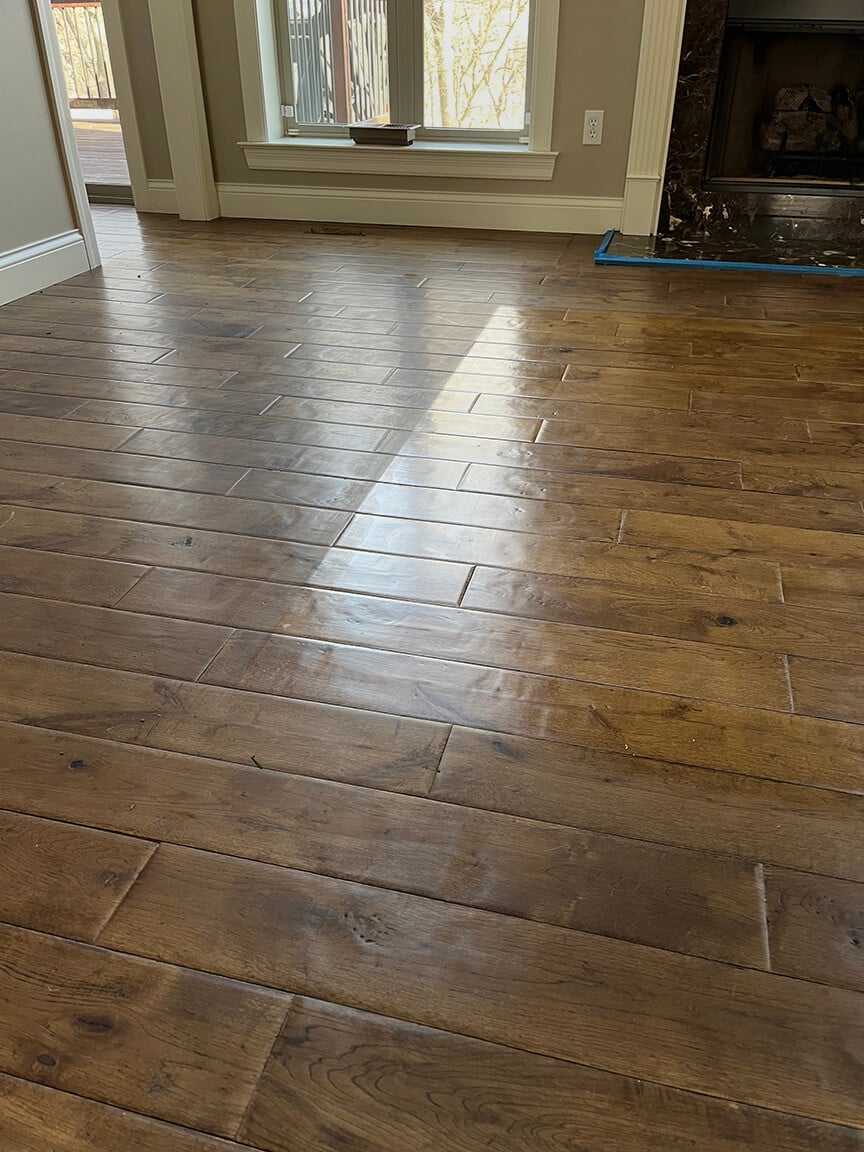
Peeling hardwood finish signals a layer that is losing its bond. Identify what is lifting before adding polish, sanding a patch, or paying for another coat.
Peeling finish is a bonding problem
When a hardwood floor’s finish peels, a layer is separating from the surface below it. Another coat will not make that weak bond strong. Find out which layer is lifting and why before choosing the repair.
The loose layer might be professional finish, consumer polish, or part of an older coating system. Calling everything polyurethane can lead to the wrong removal plan.
If the work is recent, preserve the evidence
Take clear photographs of the peeling area and the surrounding floor. Note when it appeared, whether it is spreading, and what cleaning or traffic occurred before it became visible.
Contact the installer before scraping, sanding, or applying another product. Keep any loose flake that comes away naturally without pulling more finish off. Do not create damage to make a better sample.
A fresh repair attempt can erase clues about the original failure. It can also complicate a warranty conversation. Record the problem first, then agree on the next step.
The top layer may not be the original finish
Acrylic polishes can add layers over an existing floor. Those layers may behave differently from the coating underneath. If a restorer was used, the repair starts by identifying it.
Bona’s cloudy-floor discussion describes multiple surface and coating causes. The Basic Coatings checklist makes cleaning-product history part of the assessment.
Our Rejuvenate article shows examples from an existing product discussion. Our wax-versus-acrylic guide helps separate materials. Neither photo comparison can identify the coating on your floor by itself.
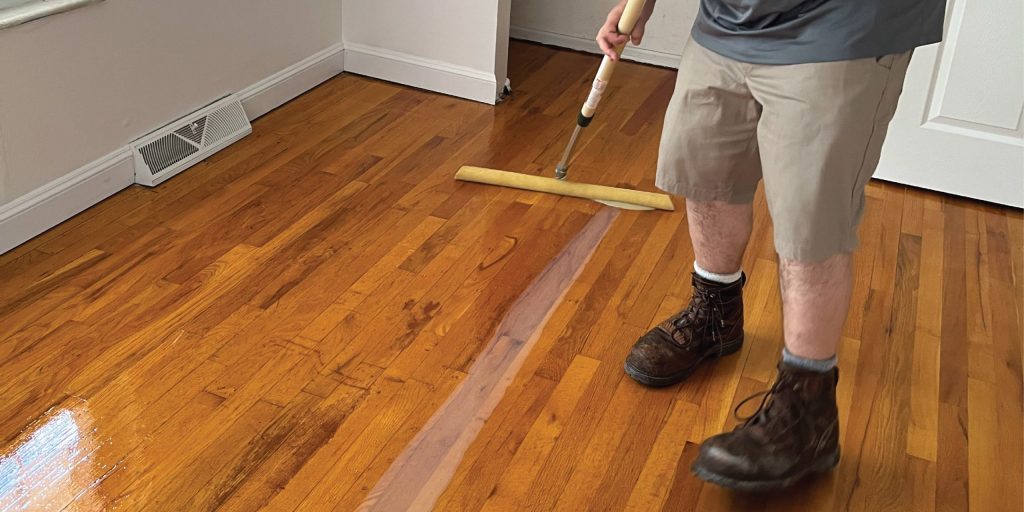
A new finish layer needs a stable surface underneath it. Applying more finish cannot repair a weak bond below.
What the contractor should investigate
The evaluation should cover the previous coating, cleaning products, preparation, application conditions, and any moisture history. It should also establish whether failure is isolated or widespread.
A patch near a wet doorway may raise different questions from sheets lifting throughout a newly coated room. Peeling only at an earlier repair edge points to another boundary worth examining.
Ask what test or observation supports the proposed cause. “Bad finish” is not a complete diagnosis. A high-quality product can still fail if it is applied to an unsuitable base.
The NWFA finish overview is useful background on different coating types. The actual repair has to follow the system and condition present in your home.
Repair the weak layer before renewing protection
If only an added polish is failing, a suitable removal process may expose usable finish beneath it. That does not mean removal is simple or that the underlying floor will be flawless.
If the original finish is releasing from the wood, or several layers are unstable, a maintenance coat is unlikely to be the complete solution. Sanding and refinishing may be considered when the floor’s construction permits it.
If moisture is driving the problem, address that source before coating work. A cosmetic repair over a continuing moisture problem can fail again.
What about a small peeling patch?
Small area does not always mean small repair. A local patch can leave a sheen or color boundary, and the surrounding finish may share the same weakness. The contractor needs to assess both the defect and the area it joins.
Our one-room repair guide explains transition issues. The ReCoat qualification article explains why sound existing finish matters.
A Clean ReCoat is appropriate only after the base is suitable. We would not recommend it as a way to hold loose finish in place.
Ask for the repair scope in writing
The scope should identify the failed material, the removal boundary, the proposed preparation, the new system, and any limits on matching. It should say what happens if more failure appears during preparation.
If you need an independent assessment, contact ReCoat Revolution with the date of the last work, the product information if available, and photos. Include your cleaning history. It helps us investigate the bond instead of merely covering the symptom.