
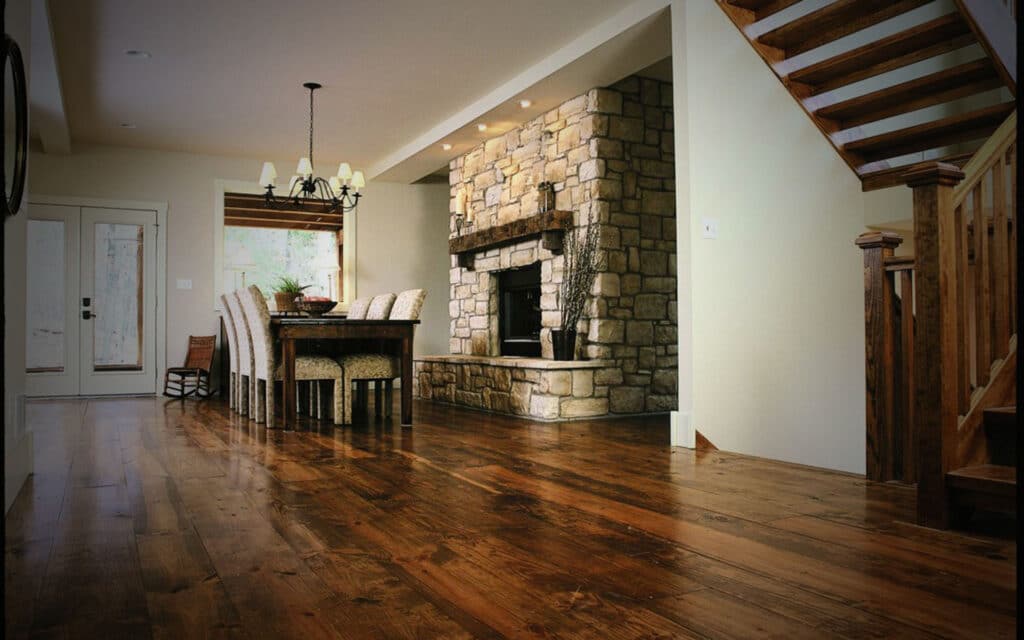
wood floor care
Summer Humidity and Hardwood: What to Watch
Summer humidity can make hardwood swell. Track indoor conditions, investigate new cupping, and solve moisture problems before scheduling finish work.
Summer humidity can change the floor before the finish looks worn
Hardwood can gain moisture and swell during humid conditions. If you notice raised board edges, tighter joints, or a new change underfoot, check moisture conditions before planning a cosmetic refresh.
A new coat of finish cannot correct an active moisture imbalance. We would rather postpone the coating conversation than put a good finish over a floor that is still moving.
The NWFA’s prevention guidance gives general indoor targets of 30–50% relative humidity and 60–80°F. Your flooring manufacturer may specify a different range. Use its requirements for your floor.
Measure the house instead of guessing from the weather
Outdoor humidity is not the same as the conditions beside the floor. Air conditioning, open windows, crawl spaces, leaks, and the way rooms connect all affect the indoor environment.
A basic hygrometer measures relative humidity in the air. Put it where it can give a representative reading, away from a supply vent or a sunny window. Record conditions over several days rather than treating one number as the whole story.
That still does not measure moisture inside the boards or subfloor. If the floor changes shape, a flooring professional may need to inspect those materials as well. Do not assume normal room air proves the entire assembly is dry.
Know which changes deserve attention
Small seasonal movement is different from a sudden ridge, a soft area, or a localized change near plumbing. The pattern matters.
Look around the dishwasher, refrigerator, exterior doors, and any wall shared with a bathroom. Also note whether the change appears throughout the room or over a particular part of a crawl space or basement.
If there is visible water or a suspected leak, address that source promptly. Do not wait for a floor-finishing appointment to solve a plumbing problem.
Bruce’s FAQ lists its own humidity guidance. The difference from NWFA’s general range is a good reason to check the actual product documentation rather than blending numbers into a made-up universal target.
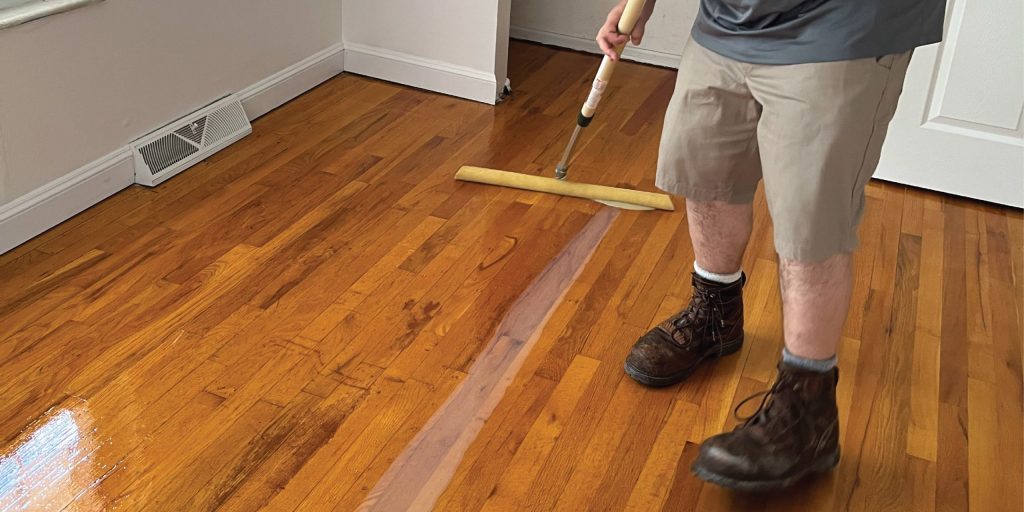
Apply finish after floor and room conditions are stable. A new coat cannot correct a moisture problem.
“Can I just run a dehumidifier?”
It may help manage indoor air when properly sized and used. It does not automatically fix a leak, wet subfloor, or moisture entering from below. A room can feel comfortable while a hidden source continues feeding the floor.
Avoid dramatic changes intended to force the boards flat quickly. The goal is a stable environment within the floor’s requirements. Get professional guidance for persistent or substantial distortion.
Do not sand raised edges while the moisture condition is unresolved. Removing material before the floor stabilizes can leave a different shape later. The NWFA installation reference distinguishes cupping and crowning; neither is simply a dull-finish problem.
Plan summer floor work around the room conditions
You can have floor work done in summer. The calendar does not automatically rule it out. The floor and the finish system need suitable conditions before, during, and after the work.
Keep the indoor environment controlled when the crew leaves. Turning off climate control for a vacation can change both drying conditions and the wood’s moisture balance. Ask for the exact aftercare instructions rather than using someone else’s project timeline.
Our best-time-of-year guide provides the broader scheduling context. The return-to-use article explains why a dry-looking surface is not necessarily fully cured.
What a finish service can and cannot do
A Clean ReCoat renews protection on a floor with a suitable base. Full refinishing changes the surface more deeply. Neither service replaces moisture diagnosis.
Keep up dry soil removal and prompt spill cleanup through summer. Our maintenance guide covers those habits without turning every cleaning session into a wet-mop routine.
If the floor has changed shape, contact ReCoat Revolution with photos, recent indoor readings, and the location of the change. Mention any leak, HVAC interruption, or long period with open windows. That history can matter more than how shiny the floor looks.