

diy vs pro
How to Remove Candle Wax From Hardwood Floors
Let candle wax harden before lifting it gently from hardwood. Avoid heat and scraping that can damage finish, and separate spilled wax from floor polish.
Remove candle wax without turning a spill into a scratch
Let spilled candle wax harden before trying to remove it from hardwood. Do not chase warm wax around the room with a mop. Do not reach for an iron or a razor blade before checking the floor’s care instructions.
The goal is to lift material off the surface while leaving the finish beneath it alone. Once the wax is gone, you can assess any remaining color or damage. Those are separate jobs.
Bruce’s floor-care page describes cooling candle wax with a sealed ice bag. Use that guidance only when appropriate for your floor, and keep moisture off the wood.
First, identify what you are removing
A candle drip is a localized spill. Paste wax is a floor-maintenance system. Acrylic polish is another type of coating. Calling all three “wax buildup” sends you toward the wrong remedy.
If someone has applied a shine product across the entire room for years, use our wax and acrylic guide. If you have a few raised drops beneath a candleholder, start with the spill.
Do not choose a commercial floor stripper merely because its label includes the word wax. Its compatibility with the existing finish still matters. The NWFA finish overview is a useful reminder that wood floors do not all share one protective surface.
A cautious removal sequence
- Keep feet and pets away. Wax can be slippery, and walking through it spreads the problem.
- Allow it to harden. Avoid rubbing liquid wax into the grain or seams.
- Check the flooring guidance. If cooling is permitted, keep ice sealed and wipe any condensation promptly.
- Lift only material that releases gently. Work without digging into the finish. Stop if the coating lifts with the wax.
- Clean the remaining surface as directed. Use a small amount of the approved cleaner on a soft cloth, then inspect after drying.
This is a light spot-cleaning approach, not permission to scrape a stubborn deposit aggressively. A small residual mark is easier to assess than a wide scratch left by a tool.
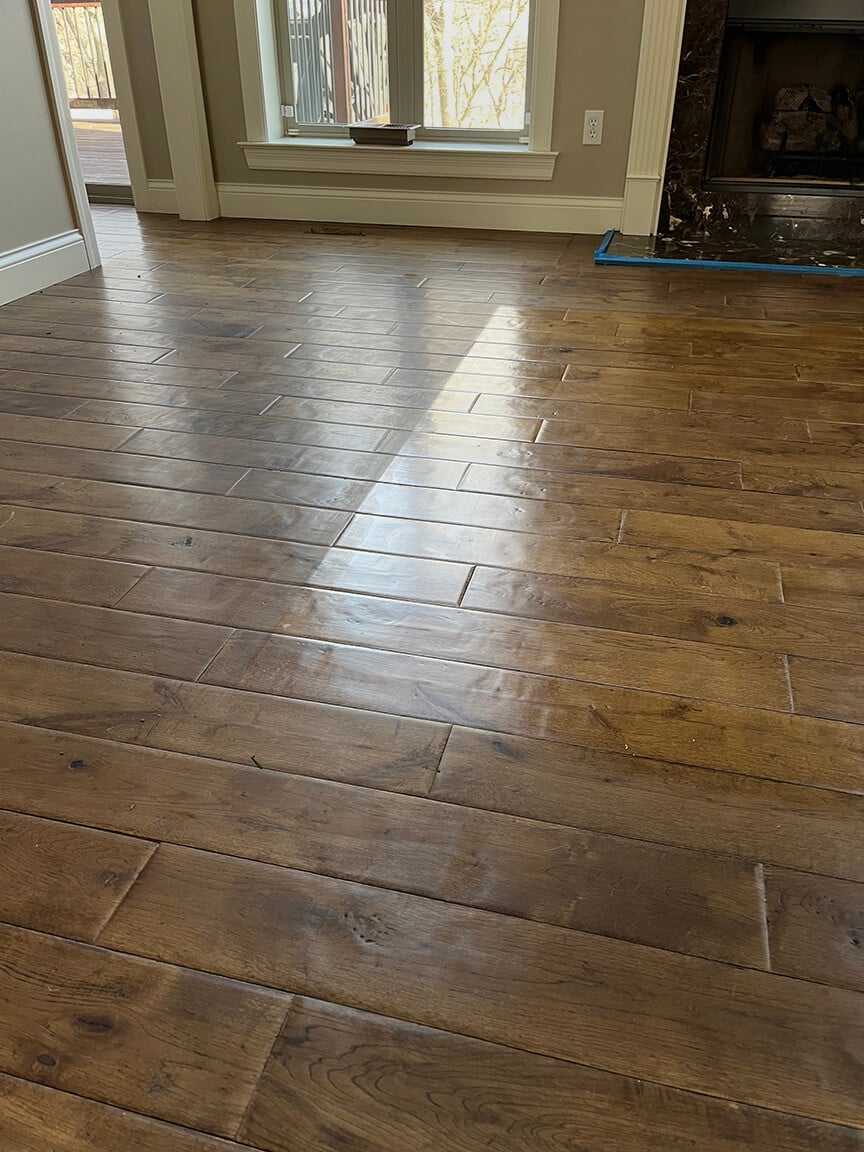
Professional floor preparation. A small candle spill is a different problem and should start with the least invasive compatible removal method.
What if the candle left a colored mark?
Colored wax can leave more than a raised deposit. After removing the loose material, check whether the remaining mark is on top of the finish, in the finish, or deeper. A photo can show its location, but it cannot always establish its depth.
Do not treat the stain with a sequence of solvents until something changes. A pale spot caused by removing finish can be more noticeable than the original drip. Keep the candle packaging if available and tell the contractor which products you already tried.
If there is a physical gouge, our scratch and drag-mark guide explains why depth matters. Cleaning will not flatten missing wood.
Skip the heat-based internet tricks
An iron, hair dryer, or hot cloth may soften wax, but your floor finish is also in the treatment area. We would not trade an isolated spill for an uncontrolled heat-and-moisture experiment.
The same caution explains our position on steam mops. A floor’s tolerance depends on more than whether the surface looks sealed.
Bruce’s care FAQ emphasizes finish-compatible maintenance. When you cannot establish compatibility, stop before the next chemical or tool.
When to hand it over
Get help if the wax reaches open joints, the finish peels during lifting, the color remains after gentle cleaning, or you do not know what coating is on the floor. Professional cleaning can be appropriate for a surface problem, while acrylic and wax removal is a separately assessed process.
A ReCoat is not a stain eraser. It should not be used to seal a wax spill beneath new finish. The surface must be clean and suitable first.
For help with a stubborn spill, contact ReCoat Revolution with a close photo, a wider room photo, and the methods you have tried. That is more useful than guessing that every wax mark needs full sanding.