

wood floor care
Can You Use a Steam Mop on Hardwood Floors?
Do not steam-mop hardwood floors. Heat and moisture can reach vulnerable seams and worn finish. Learn a safer routine and what to check after steam use.
A steam mop is the wrong tool for hardwood floors
Do not steam-mop hardwood floors. Heat and moisture are a poor combination for a floor with seams, worn spots, and an unknown coating history. A “sealed” description does not turn the whole floor into a waterproof sheet.
The NWFA maintenance guidance advises against steam mops. Bruce’s hardwood FAQ also warns that steam-related damage falls outside its warranty. Check your own flooring instructions rather than a mop maker’s broad list of surfaces.
The joints matter as much as the boards
A finish protects the face of the wood. It does not make every board joint, nail hole, scratch, or exposed edge impervious to moisture. Steam concentrates cleaning action where a light wipe would often do the job.
Repeated passes over a stubborn mark can add more exposure to the same place. That is especially unhelpful around a dishwasher, pet bowl, doorway, or traffic lane where the finish may already be compromised.
We would rather see a little soil remain while you identify it than watch a homeowner keep heating one spot until the floor changes shape.
“But the mop says it is safe for sealed floors”
Read both sets of instructions. The mop label describes the appliance. The flooring or finish manufacturer knows the surface you are trying to protect. If the two conflict, do not assume the broader appliance claim overrides the floor’s care requirements.
This applies to engineered flooring too. Its layered construction does not remove the real wood at the surface or make every adhesive and joint tolerant of steam. Our engineered-floor guide explains why construction matters when you choose repairs.
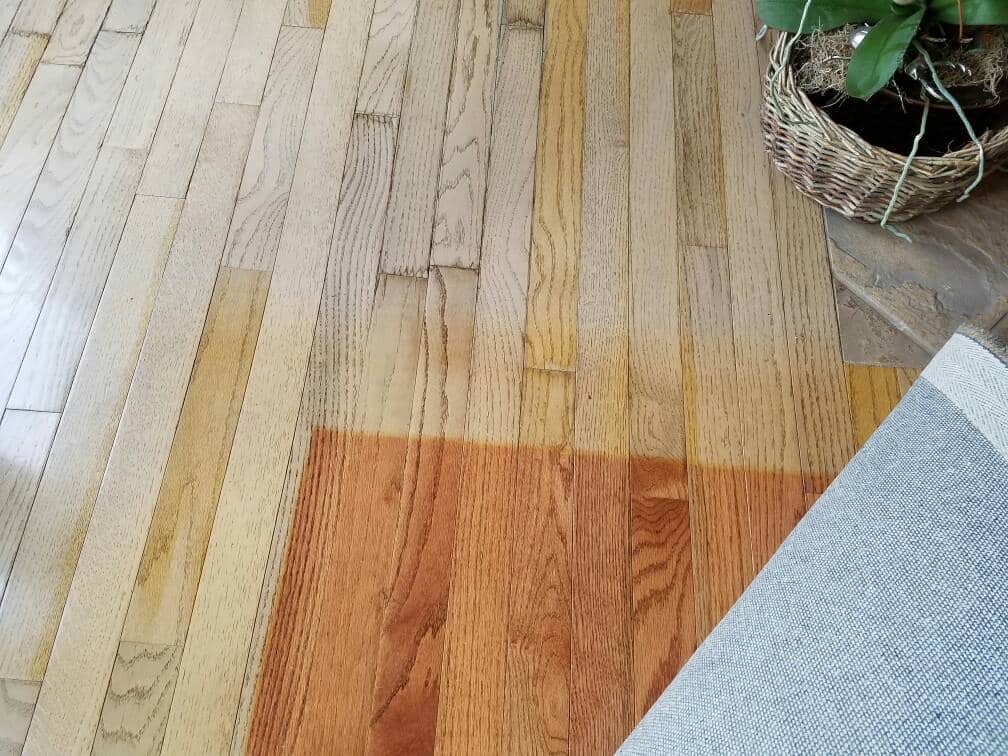
Discoloration can have several causes. The appearance of a pale area alone does not tell us whether moisture caused it.
If you already used steam, inspect before treating
Stop using the machine and remove any visible moisture without flooding the area again. Keep the room at its normal controlled conditions. Do not aim concentrated heat at the floor to hurry it along.
Photograph the area with light crossing the boards. Look for a new white patch, changing sheen, raised board edges, peeling, or dark seams. Compare it with a nearby area that did not receive the same treatment.
A visible change does not prove steam is the only cause. A hidden leak, existing polish, or earlier wear may be involved. What matters is whether the condition remains, spreads, or changes with the room environment.
If board edges rise or the floor feels different underfoot, stop cosmetic repairs and have the moisture condition checked. Sanding a moving floor because it looks uneven can make the eventual result worse.
How to clean without steam
Start by removing grit with a soft floor attachment or a clean dry microfiber pad. Use the cleaner approved for the finish on a lightly damp cleaning pad for remaining soil. Work in manageable areas and change a dirty pad rather than pushing the same residue farther.
For a stuck spot, follow the surface manufacturer’s spot-cleaning method. Do not assume more heat is the answer. Bona’s floor-care brochure distinguishes routine cleaning tools and products, which is useful when replacing a steam-based habit.
Our cleaning-method guide covers the basic routine. If the floor is hazy after cleaning, use the cloudy-floor guide before adding another product.
Finish repair and moisture repair are different jobs
A surface cleaning problem may respond to professional wood-floor cleaning. A stable floor with deeper finish damage may need sanding and refinishing, if its construction allows it.
Neither service should cover up an active water problem. ReCoating also cannot flatten cupped boards or remove damage inside a layered board. The condition has to be understood first.
For help choosing the next step, contact ReCoat Revolution with the flooring type, the area affected, and photos taken after the surface is dry. Tell us when the change appeared and whether it is getting worse.