
recoating education
Can You ReCoat Hand-Scraped Hardwood Floors?
Hand-scraped hardwood may qualify for a ReCoat. Learn how texture, worn high points, and finish compatibility change the preparation and repair plan.
A textured floor needs a preparation plan that respects its shape
Some hand-scraped hardwood floors can be ReCoated without sanding away the texture you bought them for. The existing finish must be sound, and the preparation must suit the raised areas, hollows, and edges of the boards.
That last part matters. A floor that is flat enough to walk on is not necessarily flat enough for every preparation method. Treating a sculpted surface like a smooth one can change the appearance before the new finish even goes down.
Our recommendation is to assess the finish and the texture together. Do not choose a service solely because the estimate includes the words “buff and coat.”
What do you want to keep?
Hand-scraping, wire-brushing, distressed marks, and beveled board edges describe different design details. Photograph the details you like. Tell the contractor whether preserving them matters more than removing every scratch.
If you want a smooth floor instead, that is a different goal. Removing texture may involve removing wood, and the floor’s construction may limit what is possible. Our engineered-floor refinishing guide explains why the available wood layer matters.
Bona’s homeowner ReCoating explanation describes preserving bevels and texture by refreshing the protective surface. That is a useful distinction between maintenance and a full change of appearance. It is not a promise that every textured floor qualifies.
Look closely at the high points
Raised parts of a textured board can receive different wear and preparation pressure than recessed parts. Look at traffic lanes, chair areas, and the route through the kitchen. Does the finish look intact across the full shape of each board?
A pale ridge may need closer inspection. So may a dark hollow that stays dirty after ordinary cleaning. Neither observation gives us the entire repair plan from a photograph.
The Bona Recoat System technical sheet includes a specific precaution for hand-scraped and distressed flooring. Its preparation check must not expose bare wood or remove color at the high points. That instruction belongs to that system; it shows why a contractor needs a defined stopping point.
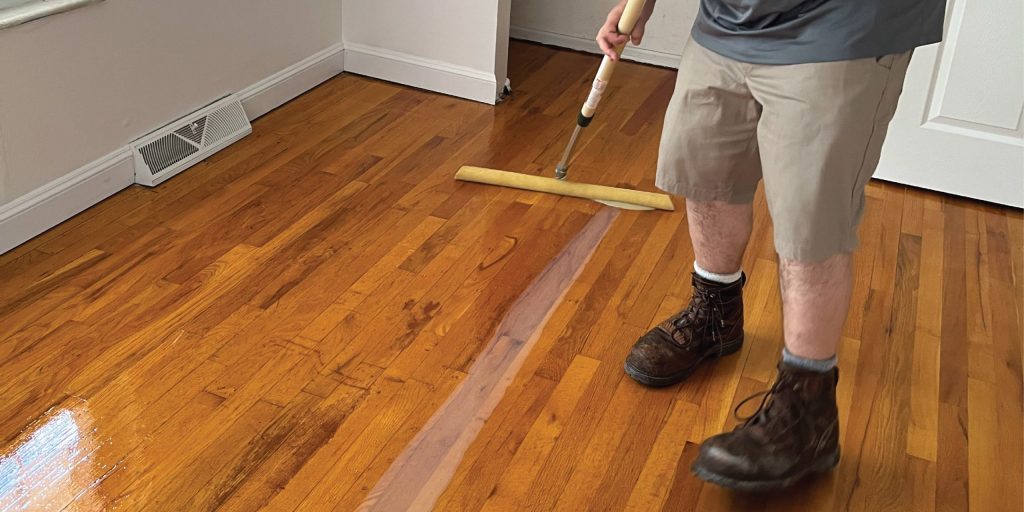
Professional finish application on a wood floor. A textured surface needs its own preparation and compatibility assessment; this photo is general process context.
Get the maintenance history out in the open
Texture does not make old polish, wax, or an unknown coating irrelevant. Gather the cleaner bottles and describe anything used to add shine. Include products applied by a previous owner if you know about them.
A floor with sound factory finish and routine cleaning has a different history from one with several added layers. The Basic Coatings maintenance checklist calls for identifying maintenance products and checking for acrylic or paste wax before its proposed refinisher treatment.
Do not dig material out of grooves with a metal tool to prepare for the estimate. You could damage the finish and turn a cleaning question into a repair question.
Ask how the whole surface will be prepared
The useful question is not simply which machine the contractor owns. Ask how the method reaches recessed areas without stripping the raised ones, and how compatibility will be checked.
Ask what happens if a test exposes color loss or shows an unsuitable bond. A smaller assessment should inform the job, not become a reason to push ahead after the floor reveals a problem.
For factory-coated boards, read our prefinished and aluminum-oxide guide. For the purpose of a test area, see what an adhesion test can establish.
Keep the expected result realistic
A qualified ReCoat can renew protection while keeping the existing surface character. It does not fill a deep gouge with new wood, restore missing stain, or make a damaged ridge match automatically.
Sometimes cleaning is enough. Sometimes local repair is needed before coating. Sometimes the surface cannot support the proposed maintenance service. Those are better answers than an attractive finish applied over an unresolved problem.
When you contact ReCoat Revolution, send one room photo and close-ups of the texture and worn areas. Tell us what you want to preserve. That helps us discuss the right service without treating every board as a flat blank slate.