
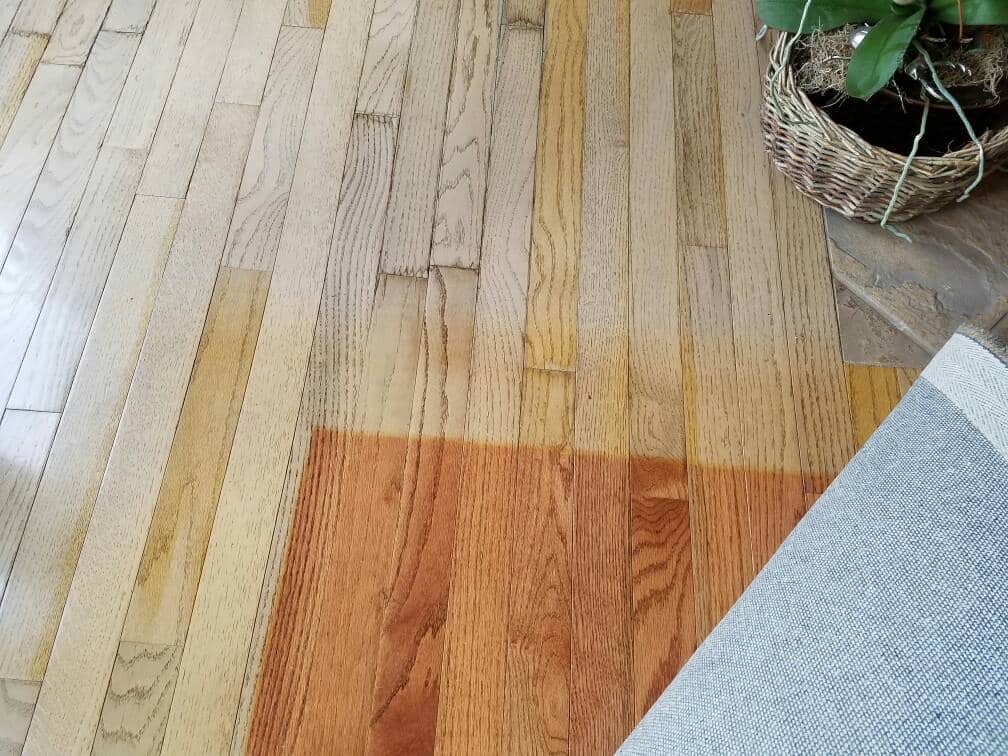
wood floor care
How to Protect Hardwood Floors From Sun Damage
Reduce uneven hardwood fading with window coverings, furniture rotation, and realistic expectations. A fresh clear coat will not erase an old rug outline.
Sun protection starts at the window
To reduce uneven hardwood fading, manage the light reaching the floor. Use appropriate window coverings, vary rug and furniture placement when practical, and recognize that wood and finish change with age.
Do not buy a floor polish because it promises shine and expect it to erase a sun line. A reflective surface and an even wood color are different results.
Bruce’s hardwood FAQ explains that light can darken or lighten wood. That is why the protected area under a rug is not always the lighter area.
Find the exposure pattern before choosing a fix
Look at the floor at several times of day. Note which windows cast direct light and how far it travels. Compare an exposed traffic lane with the area under a movable piece of furniture.
Photograph the room without changing camera filters or lighting. A sharp rectangular outline suggests a different exposure history. A gradual change near a window may have another pattern. Neither proves that the stain color itself was applied unevenly.
Our faded-floor repair guide addresses damage already present. This article is about reducing the next difference before it becomes a larger repair decision.
Build a practical light-control routine
Close blinds or shades during the strongest exposure when the room is not in use. You do not need to live in a dark house all day. Focus on the windows and hours that concentrate light on the same boards.
If you are considering window film, talk with a qualified installer about the glass, warranty, and the film’s actual performance. Do not assume a UV claim means every source of fading disappears or that the product is suitable for every window assembly.
Rotate smaller rugs and movable furniture when the layout allows. A sofa that has sat in the same place for a decade may leave a contrast even with careful maintenance. The purpose of rotation is to reduce uneven exposure, not guarantee identical aging.
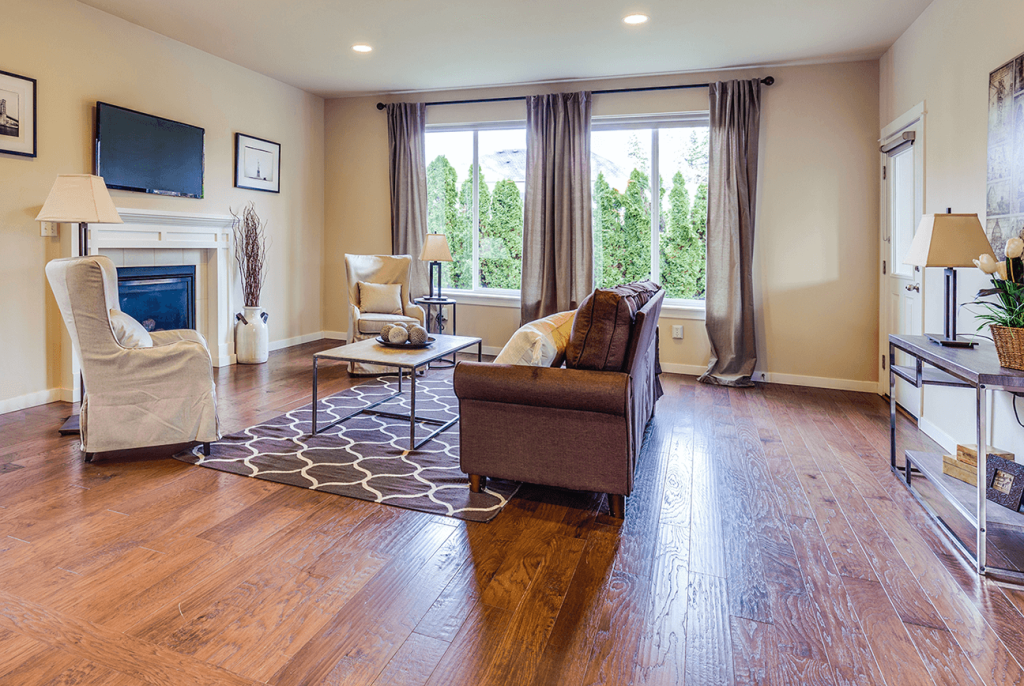
Daylight reaches different parts of a room unevenly. Light control and finish maintenance solve different problems.
Rug protection has a tradeoff
A rug can protect a traffic path while also shielding that area from light. Both effects can be real. Removing all rugs may reduce one kind of outline but expose the finish to more grit and wear.
Choose backing approved for the floor, keep the underside clean and dry, and inspect it periodically. If you recently had the floor coated, wait for the crew’s rug-return instructions. The aftercare guide explains why the timing matters.
NWFA prevention guidance covers environmental conditions and scratch protection. Treat sunlight as one part of floor care, alongside moisture and physical wear.
Can we make the current color even again?
Sometimes a finish refresh improves clarity and makes the room look more consistent. But a clear coat does not remove a color difference inside the wood. Be skeptical of a promise that every rug outline disappears with a maintenance coat.
A Clean ReCoat works on suitable existing finish. Sanding and refinishing can address some deeper color differences when enough material remains. The NWFA refinishing overview separates that deeper work from routine care.
Even sanding is not a promise of a perfect match. The wood species, stain history, remaining wear layer, and depth of change affect the result. A representative sample is more useful than an edited before-and-after picture from another house.
Make the repair and prevention plans together
If the floor needs work, include the window exposure in the conversation. Otherwise, you may pay to improve the floor and immediately recreate the conditions that caused the uneven look.
Continue the basics in our maintenance guide. Do not increase wet cleaning because a faded area looks dull. Color change is not necessarily dirt.
When you contact ReCoat Revolution, send a room photo that includes the windows and a close photo of the transition. Tell us how long the rug or furniture has occupied that spot and whether you want better protection, a different sheen, or a color correction.