
recoating education
Why Are My Hardwood Floors Turning Gray?
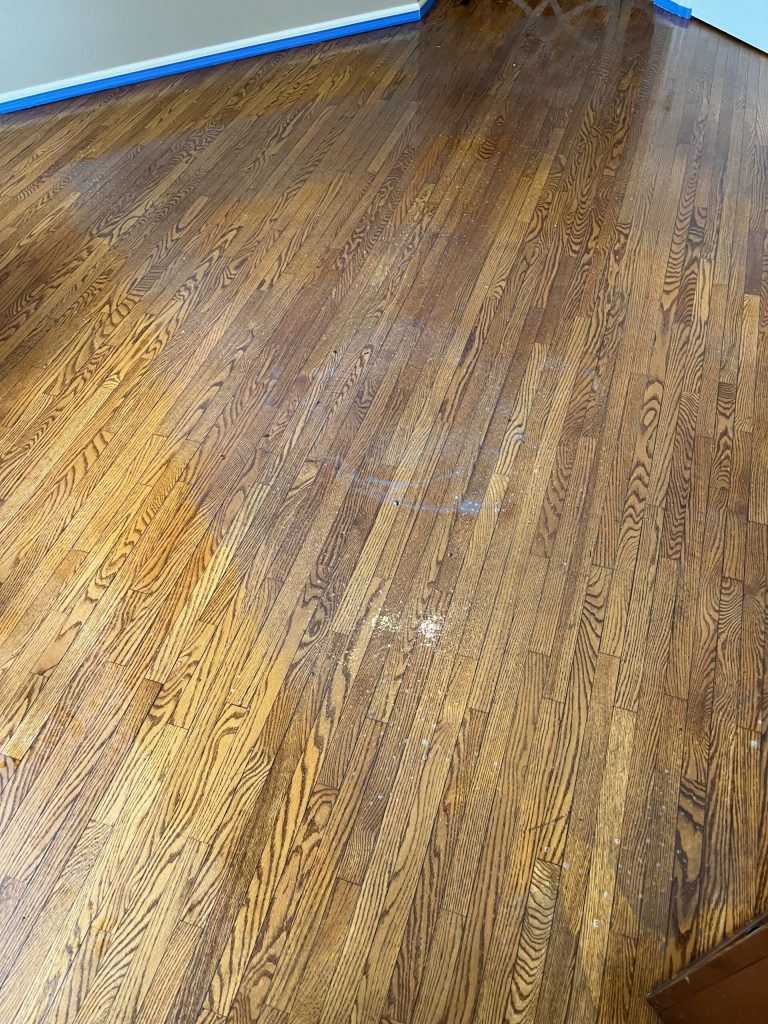
Gray hardwood can mean residue, worn finish, moisture, or a color change in the wood. Check the pattern before scrubbing harder or applying polish.
Gray hardwood can mean more than dirt
A gray traffic lane may be surface residue, worn finish, or a change in the wood beneath it. Do not keep scrubbing until the color disappears. First determine which layer is gray.
This is one of the easiest ways to spend money on the wrong service. Cleaning cannot replace missing finish, and a clear coat cannot make deeply discolored wood become its original color again.
Start with where the gray appears
A repeated walking path, the space in front of a sink, and a whole room under an old polish layer point to different questions. Compare the affected area with a quieter part of the same floor.
Look for changes in texture, sheen, and board shape. Roughness or exposed grain deserves attention, but do not turn a home observation into a final diagnosis. Light and residue can make a surface look different than it feels.
Bona’s cloudy-floor guidance covers several surface-layer causes. Our cloudy-floor article is the right companion when the gray looks like a removable film.
Check the maintenance history
List the cleaners, soaps, polishes, and restorers used on the floor. Include anything applied by a housecleaner or a previous owner if you know it. Photograph the current bottles.
An added layer can hold soil and change how the floor reflects light. That does not prove every gray patch is buildup. It tells the contractor what to assess before proposing a coating.
Our wax and acrylic explanation separates those materials. Basic Coatings’ maintenance checklist also calls for product history and documentation of existing damage.
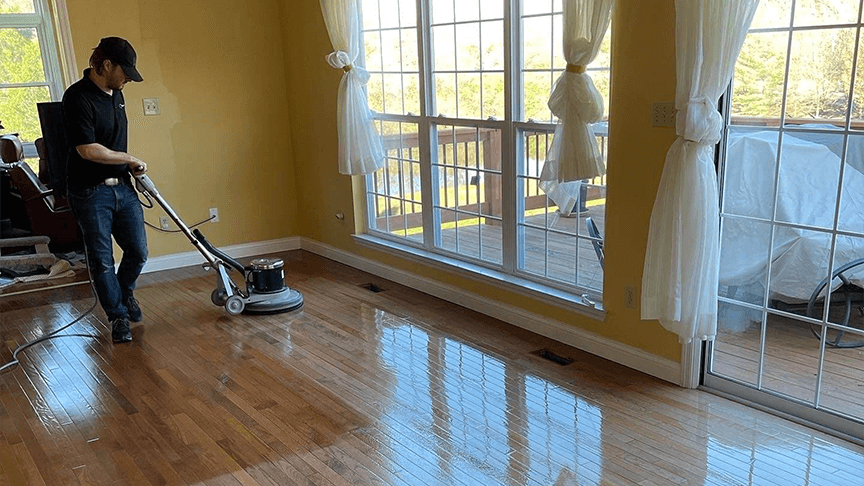
Professional surface preparation. Cleaning residue and restoring exposed wood require different scopes of work.
Use one compatible cleaning check, then reassess
On a sound older finish, follow the approved cleaner’s method in an inconspicuous area. Keep liquid controlled and inspect when the surface is dry. Compare the result with the untreated area under similar light.
If soil lifts and the gray appearance improves, cleaning may be part of the answer. If the same worn path remains, do not keep increasing concentration or pressure.
Skip steel wool, aggressive pads, and improvised bleach or acid treatments. They can change both color and texture, leaving a more difficult blend later.
Bare wood changes the decision
When the protective finish has worn through, the wood is exposed to a different level of wear and staining. It may need deeper preparation than a maintenance coat provides.
The NWFA refinishing guidance treats exposed wood and deeper damage as restoration considerations. Ask the contractor to identify which areas retain sound finish and which do not.
A small bare lane in the middle of an otherwise sound room can complicate matching. Do not judge the scope only by the square footage of the darkest patch. Our one-room refinishing article explains the broader transition problem.
A gray area near water deserves another check
If the discoloration sits near plumbing, a pet bowl, or an exterior door, investigate moisture history. A surface cleaner will not stop a leak or dry a wet layer beneath the floor.
Raised edges, persistent dampness, or changing board shape call for a moisture assessment before sanding and refinishing. A good finish job cannot compensate for an active source.
For color changes connected with windows or rug outlines, compare the pattern with our faded-floor guide. Gray does not establish one universal cause.
Choose a result the floor can support
Professional cleaning may reveal usable finish. Refinishing may improve deeper discoloration if enough material remains. A localized repair may be appropriate in some cases. None should be promised before the condition is assessed.
When you contact ReCoat Revolution, send a wide view of the gray path and a close photo of its surface. Include the cleaning history and any water event. We can help separate removable material from finish loss before you invest in another product.