
wood floor care
Hardwood Floor Gaps in Fall: When to Worry
Small seasonal hardwood gaps can follow drier indoor air. Track changes, check the floor’s humidity requirements, and avoid filling a moving joint too soon.
A small seasonal gap is not automatically a failed floor
Hardwood can shrink when indoor conditions become drier. Small gaps may appear as heating season begins and reduce again when conditions change. Do not immediately fill every line between the boards.
The important questions are whether the change is seasonal, how large or widespread it is, and whether the boards remain stable. Sudden or persistent changes deserve assessment.
NWFA prevention guidance distinguishes normal seasonal movement from gaps that warrant a professional look. The calendar is context, not proof that every September gap is harmless.
Make a record before changing the floor
Take photos from consistent positions. Note the room, the date, and whether the opening is between boards, at their ends, or along the room perimeter. Include any area that feels loose or different underfoot.
If you have previous winter and summer photos, compare them. A gap that repeatedly opens and closes tells a different story from one that appeared suddenly after a leak or a building change.
A basic indoor humidity log can help describe the environment. It does not replace moisture measurements in the flooring when those are needed.
Follow the floor’s environmental requirements
Locate the manufacturer’s care and installation guidance. Bruce’s hardwood FAQ gives one example of a specified humidity range; other floors can differ.
Aim for stable conditions within the applicable range. Avoid abrupt swings or turning climate control off for long absences without considering the flooring. Our summer humidity article explains the opposite side of seasonal moisture movement.
If normal room conditions do not explain the pattern, have the assembly assessed. Installation details, subfloor conditions, and the flooring itself may matter.
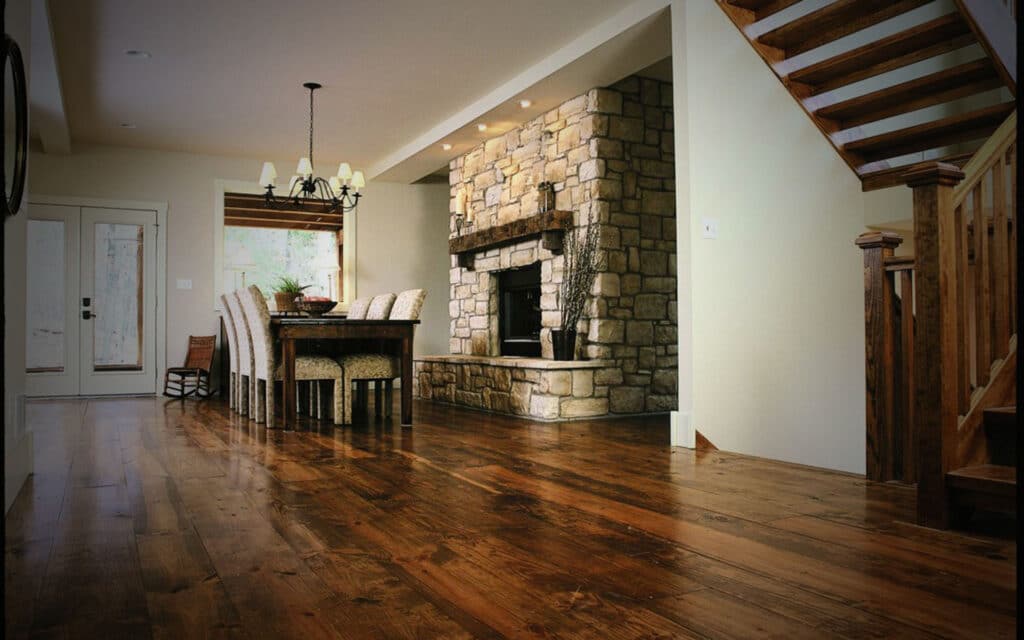
Assess the whole floor, its installation, and indoor conditions before choosing a gap repair.
Filler does not stop wood movement
A gap-filling product changes the visible joint. It does not stop the boards from expanding and contracting. Material placed into a moving joint may crack, release, or become inappropriate when the gap closes.
That does not mean gaps can never be repaired. It means the repair belongs after the cause is understood. A stable construction defect, missing material, and seasonal shrinkage are different situations.
Do not use a rigid household filler across a large area simply because the color matches. Ask whether the material and timing fit the floor’s movement and future finish maintenance.
A finish coat is not gap repair
A ReCoat improves a suitable protective surface. It does not pull boards together, repair a loose installation, or resolve the conditions behind shrinkage.
Our ReCoat qualification guide helps distinguish surface maintenance from deeper issues. If the floor is both gapped and worn, those concerns should be listed separately in the scope.
The NWFA floor-types guide also matters here. Solid and engineered constructions can behave differently, and the exact installation method influences the evaluation.
Keep cleaning from making the gap worse
An open joint is another reason to avoid excessive liquid. Remove dry debris carefully using an appropriate tool, and do not force a wet cleaning solution into the opening.
Do not pour oil or polish into the gap to darken it. You may introduce contamination where later repair or coating needs a clean surface. Our cleaners-to-avoid guide explains why those shortcuts complicate maintenance.
If a cleaner or filler has already been used, tell the contractor. Product history is useful information, not something to hide.
Get the unusual changes checked
Call for an assessment if the gap pattern is new and substantial, persists outside its usual season, accompanies loose boards, or follows a known moisture event. A floor that also cups or crowns needs a broader moisture conversation.
When you contact ReCoat Revolution, include photos from different dates if you have them. Tell us whether the goal is closing a gap, renewing worn finish, or both. That lets us discuss the right scope instead of selling a surface service for a movement problem.