

recoating education
Found Hardwood Under Carpet? Check This First
Found wood floors beneath carpet? Check the material, moisture, stains, fastener damage, and finish before deciding whether to clean, ReCoat, or sand.
Finding wood is good news. Its condition decides the next step.
Hardwood beneath carpet may be restorable, but removing the carpet does not tell you whether cleaning, ReCoating, sanding, or board repair is needed. Inspect the whole exposed floor before choosing a service.
The attractive patch in a closet may have lived a different life from the doorway or the area beside a former pet bed. Plan around the floor you have, including its difficult spots.
Confirm the material before planning the finish
Older homes can have wood flooring, patched areas, and other materials beneath the same carpet. A wood-looking surface does not establish the construction or remaining sanding capacity.
Start with accessible edges, existing records, and professional inspection. Do not cut an exploratory hole through the floor. If it is engineered wood, the face layer and earlier restoration history matter.
The NWFA refinishing overview separates maintenance from full restoration. That distinction becomes useful after the floor’s condition is clear, not before the carpet comes out.
Make a simple room map
Photograph the room from several directions. Then mark the locations of stains, loose boards, damaged edges, missing sections, and old repairs. Include the areas where carpet tack strips and fasteners were installed.
This helps a contractor estimate more accurately than a close-up of the nicest board. It also keeps individual repairs from disappearing inside a vague “refinish everything” quote.
Dark patches need a cause assessment. Our pet-stain guide explains why stains beneath the finish can remain after a new coating. A dark patch is not automatically proof of a pet accident; leaks and other causes should also be considered.
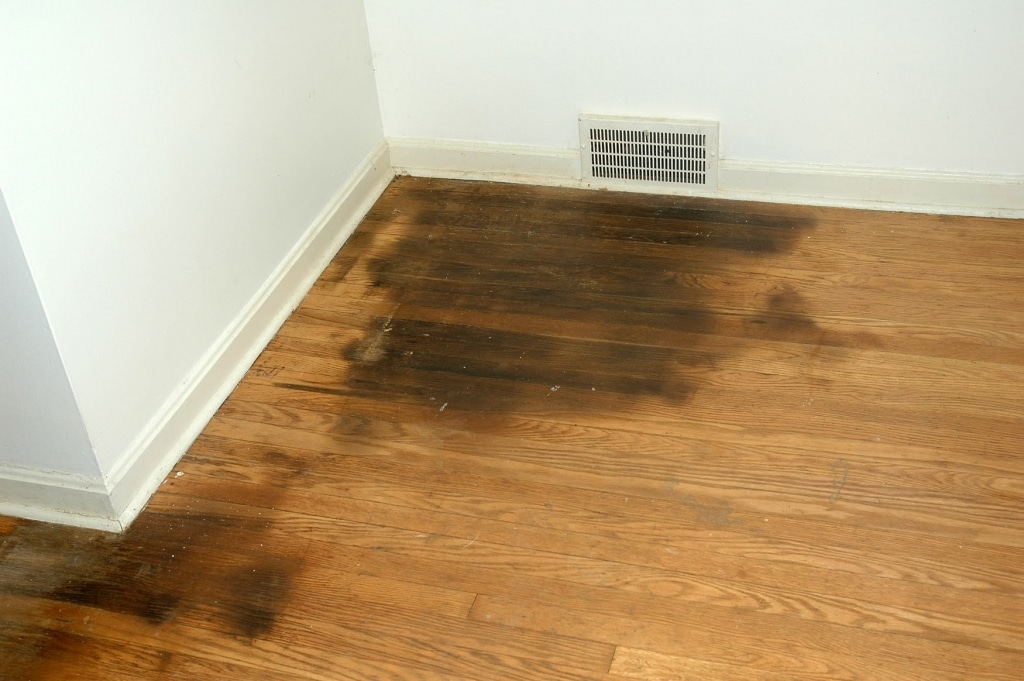
Staining and localized damage need assessment before finish work. This existing restoration image is not evidence from a newly uncovered carpet project.
Leave unknown residue out of the DIY experiment
Carpet backing, old adhesive, cleaning products, and the original finish can leave different materials behind. Their appearance alone does not establish a safe removal method.
Do not start with a rental sander or a solvent mixture. Avoid dry scraping unidentified old adhesive. Have unknown materials assessed before disturbing them, especially when the installation history is missing.
Once the material is identified, removal and surface preparation can be included in a clear scope. That is a better basis for pricing than assuming every sticky patch will disappear during routine cleaning.
Choose the least invasive service that solves the problem
If the finish is intact and the main issue is removable soil, cleaning may be enough. If it is sound but worn, a qualified ReCoat may be worth considering. If the wood needs color correction or deeper restoration, sanding may be appropriate when the floor can tolerate it.
Missing wood, unstable boards, and deep damage require their own repair plan. A clear finish cannot fill a missing section or correct an active moisture problem.
Our ReCoat-versus-refinish comparison can help you discuss those options. Ask the contractor to list repairs, preparation, and finish work separately so the proposal matches what was found.
Contact ReCoat Revolution with the room map and photos before buying equipment or coating products. We can help assess what can be preserved and what needs attention first.