
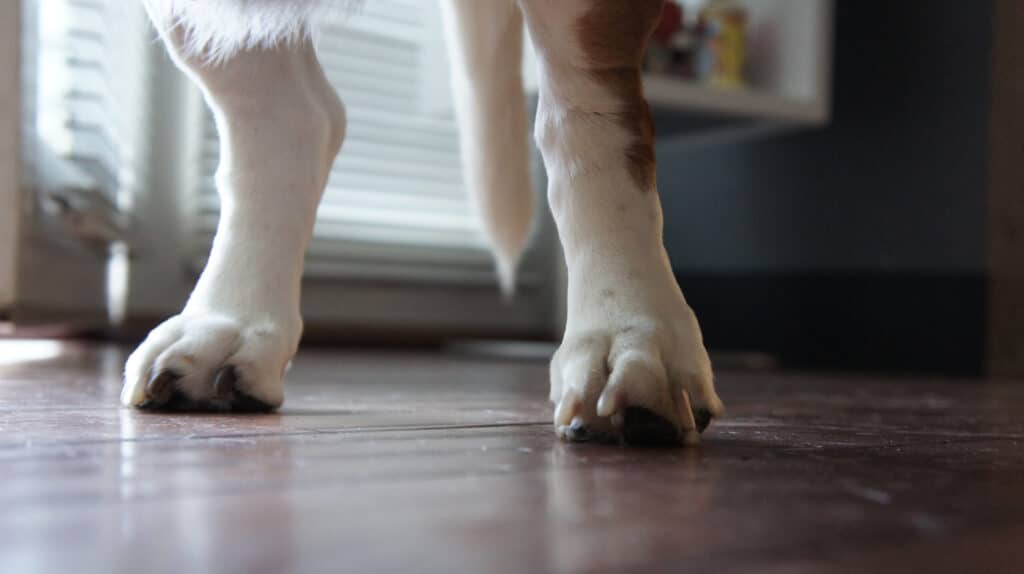
pet damage
How to Clean Fresh Dog Urine From Hardwood
Blot fresh dog urine promptly and use a finish-compatible cleanup method. Learn why soaking, stronger mixtures, and deodorizer alone can cause problems.
Blot the accident promptly. Do not soak the floor to clean it.
For fresh dog urine on hardwood, remove the liquid promptly with clean absorbent material. Then use a cleanup method approved for the flooring and finish. Keep additional liquid from spreading into joints or beneath nearby items.
A fresh accident is a cleanup problem first. An old black stain or recurring odor is a different assessment. Treating both with a stronger spray can miss the actual cause.
The NWFA maintenance guidance emphasizes prompt spill removal and finish-appropriate care. Those basics still matter when the spill is a pet accident.
Keep the cleanup local
Remove a wet rug, pad, or pet bed from the area. Blot rather than spreading the liquid across more boards. Check nearby seams and the underside of anything that was covering the spot.
Use a clean cloth and the amount of compatible cleaner allowed by the instructions. Change cloths as needed. Do not leave a soaked towel in place as a homemade treatment.
After the surface dries, inspect it in ordinary light. Note any discoloration, roughness, lifting finish, or remaining odor. These observations help decide whether the problem extends beyond routine cleaning.
Read the enzyme-cleaner label carefully
“Pet stain remover” describes a purpose, not permission for every surface. Some products rely on saturation or long wet dwell times that may conflict with wood-floor care.
Check the exact permitted surfaces and directions. Then check the floor or finish manufacturer’s instructions. Approval for carpet, upholstery, or tile does not transfer to hardwood.
Do not combine an enzyme cleaner with another chemical to make it stronger. Do not use peroxide or vinegar recipes on an unknown finish. Our cleaners-to-avoid guide explains why the surface system comes first.
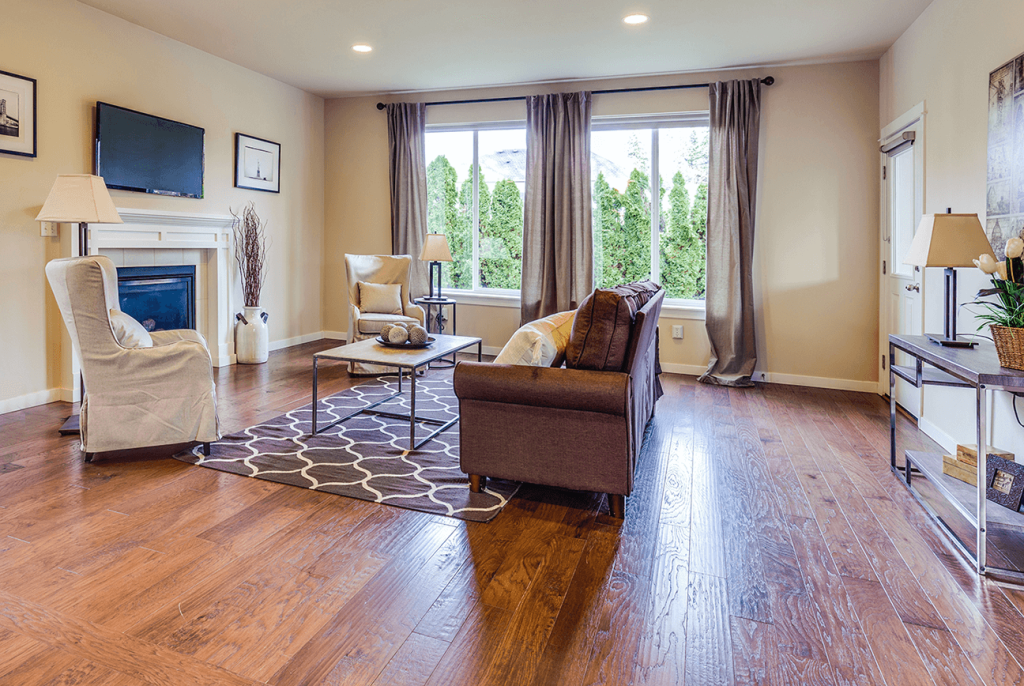
Pet areas need regular inspection beneath beds, bowls, and coverings. A general room photo does not show the depth of any particular accident.
If the smell or mark remains
A lingering problem may involve material in a seam, an affected coating, deeper wood staining, or something below the floor. A room fragrance will not tell you which one it is.
Record the location and whether accidents have happened there repeatedly. A contractor needs that history more than a guess about which chemical will remove the smell.
Our black-pet-stain article explains why a new coating cannot erase every stain. The broader pet-damage guide covers restoration choices when cleanup is no longer enough.
Reduce repeat exposure without trapping moisture
Check the floor beneath pet beds and protective pads regularly. A covering can hide an accident while holding moisture against the surface.
Choose washable protection that is compatible with the floor, and remove wet items promptly. Keep routine cleaning simple rather than layering deodorizer, polish, and disinfectant onto the same area.
If a stain, odor, or finish change remains after compatible cleanup, contact ReCoat Revolution with photos and the products already used. We can help determine whether the next step concerns the surface, the wood, or a deeper source.