
recoating education
Can Hardwood Stairs Be ReCoated?
Hardwood stair restoration depends on finish condition, tread construction, and safe access. Learn what a stair-specific assessment should cover.
Wood stairs may qualify, but they need their own assessment
Hardwood stair treads can sometimes receive a maintenance coat when the existing finish is sound and compatible with the proposed process. The condition of the tread edges, the construction, and the access plan all matter.
Do not assume a quote for the adjoining room includes the staircase. Confirm stair-service availability with your local ReCoat Revolution team and ask for a separate description of the work.
Stairs are a route through the house. The restoration plan needs to account for that before a finish container is opened.
Start with the treads and their edges
Look at the center of each tread and its front edge, often called the nosing. These areas can wear differently from the flat floor on a landing.
A new coating can renew suitable surface protection. It cannot replace missing wood, tighten a loose tread, or rebuild a damaged profile. Movement and structural concerns should be assessed before finish work.
Photograph the staircase from above and below, then add close-ups of worn edges and any old repairs. Include the landings so the transition into adjacent flooring is visible.
Confirm what the stair surface actually is
A staircase may combine solid wood, veneered components, painted risers, and replacement treads. The same restoration method may not suit every part.
The NWFA refinishing guidance explains the distinction between maintenance coating and sanding. On stairs, that decision still depends on the actual material and its remaining condition.
Our finish qualification guide covers the compatibility questions. If wax or polish has been used, share the product history. A handrail product accidentally applied to treads is relevant too.
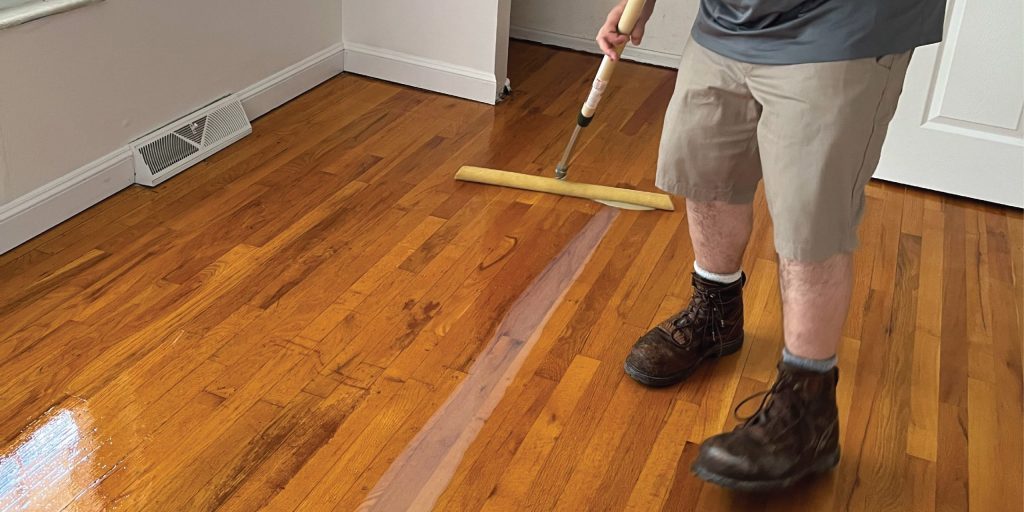
Finish application illustrates the need for controlled preparation and access. This floor photo is not a claim of a completed stair project.
Build the access plan into the estimate
Tell the contractor whether the staircase is the only route to bedrooms, bathrooms, or an exit. Discuss children, pets, and anyone who needs dependable access between levels.
Do not improvise by stepping around wet areas or treating alternating finished treads as a universal solution. The work method and allowed access need to be agreed upon for your staircase and finish.
Our walking-after-ReCoating guide explains why dry-to-touch, light traffic, and full cure are different milestones. The actual finish instructions control the schedule.
Define the scope one component at a time
Ask whether the proposal includes treads, risers, landings, trim, and railings. These are separate surfaces with different preparation needs. Also confirm whether repairs, carpet-runner removal, or runner reinstallation are included.
If the stairs have an existing runner, ask how it affects the finish and timing. Covering fresh finish too early can create a different problem from ordinary foot traffic.
A good stair plan explains the expected appearance, the limits of the work, and when the route can be used again. It does not reduce the decision to a square-foot price borrowed from a room.
Contact ReCoat Revolution with staircase photos and your access needs. Ask your local team whether they can assess the stairs as part of the project and provide a clear scope before scheduling.